
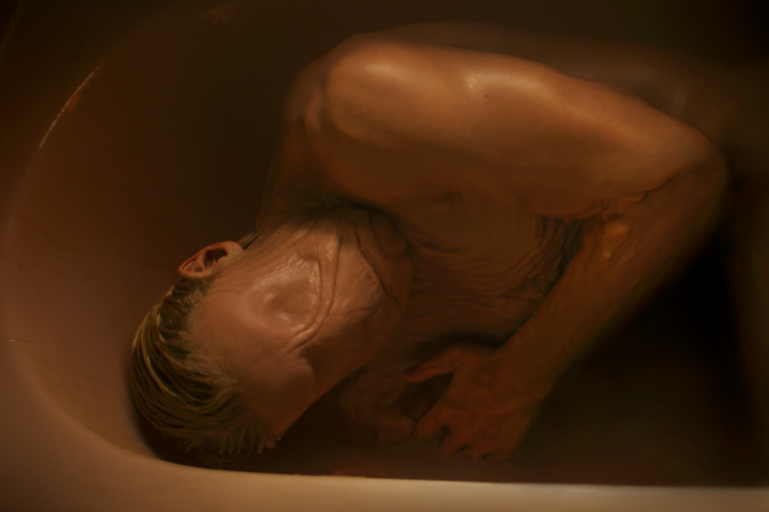
Images courtesy of Warner Bros.
Joker. Morbius. Black Adam. The super-villain anti-hero genre has had some real stinkers over the years. James Watkins’ Clayface (2026) defies this reputation by having some good material to work with that needed only a little more precision to be moulded into something incredible.
The film follows rising actor Matt Hagen (Tom Rhys Harries) as he returns to his hometown Gotham. After a mob hit leaves him scarred, disfigured and abandoned, he seeks untested medical treatment from Dr Corr (Naomie Ackie) that gives him his face back, with an unexpected cost.
Watkins directs the third instalment of the new DCU under the pen of Mike Flanagan (Doctor Sleep, The Haunting of Hill House), and under the watchful eye of co-CEO James Gunn. While initially meant to be directed by Flanagan himself, he withdrew due to scheduling issues.
Clayface is by no means a bad movie. While it has a solid premise, the quality is as fluid and shapeshifting as the eponymous character. The film has an incredible central cast, with Harries giving a wonderful performance as a spurned actor and a vengeful monster, and Ackie working as a perfect foil to him. The CGI and effects are pretty inconsistent in quality, but it’s easier to forgive some of the cheesier visuals when they have a fairly unified and singular aesthetic. When they work though, they work, with the film boasting some spectacular practical effects and prosthetics to make your skin crawl. The movie really comes into its own in terms of combining these effects and tricks in the third act, featuring a surprisingly incredible nightclub action sequence.
However, the film is too afraid of its own violence and alienating DC’s younger audience to actually stand out as a body horror film, and too afraid of immersing itself in existing DC mythos to stand out as a supervillain movie (i.e, no Batman). This is a great creative decision, with the genre’s track record proving this, but it leaves the film with a slight identity crisis as it tries to toe the line between isolated horror flick and inevitable superhero prequel.
While the prosthetics look great, there is some egregious use of The Volume and greenscreens when it comes to outside scenes, looking visually flat and sloppy compared to the rest of the film. Any time an establishing shot is in the city or exterior environment, it looks incredibly fake, completely distracting the viewer and killing any momentum the previous scene created.
While the main two protagonists are well written and engaging to watch, some of the extended cast and the antagonist feel half baked and uninteresting, with the Big Bad Guy being a boring pastiche of a mob boss that we’ve seen a million times before. And while the film is never outright boring, it does slip into some predictable scenarios and scares that cheapen the experience instead of elevating it.
To the film’s credit, it refrains from overt fan service or millions of easter eggs. This helps prevent it from sliding down the slippery slope of being ‘just another spin-off’ and instead helps cement it as its own film with its own identity, not just a scary superhero movie.
Clayface is not without its flaws, but it manages to stand on its own amongst its much-maligned genre peers.
Clayface opens in cinemas October 22nd. For tickets and more info, click here.
You can find Jasper on Letterboxd and Instagram.