
Sense and Sensibility Review: Little Passion for Dead Leaves in New Jane Austen Adaptation
Images courtesy of Universal Pictures.
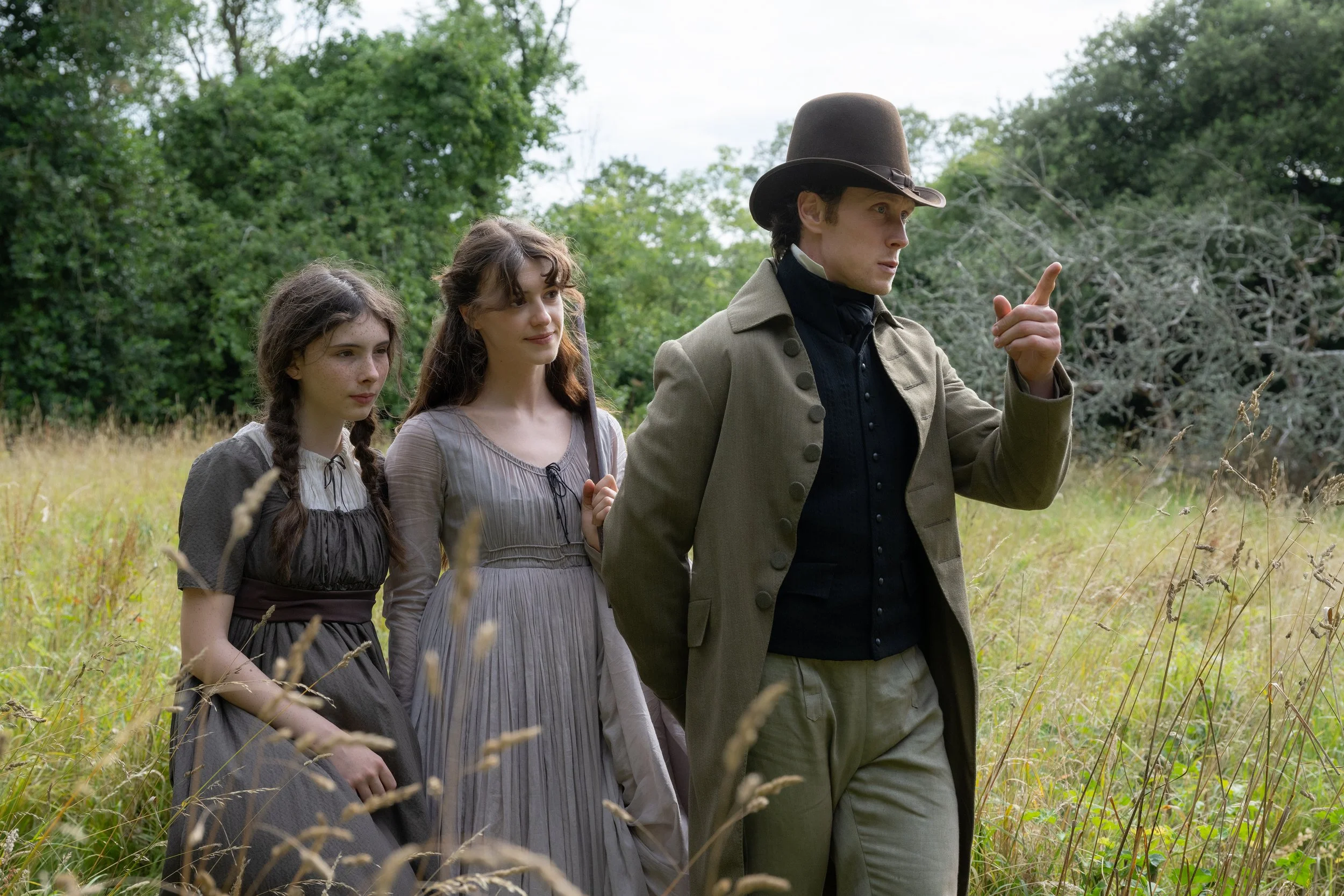
Sense and Sensibility, the latest in a series of adaptations of Jane Austen’s debut novel–most overshadowed by Ang Lee and Emma Thompson’s wonderful 1995 adaptation–tells the story of the Dashwood family – sisters Elinor (Daisy Edgar-Jones), Marianne (Esmé Creed-Miles), Margaret (Bodhi Rae Breathnach) and their mother (Caitríona Balfe). The family have lost their father Mr. Dashwood, so in come swooping his half-brother John (Tom Brooke) and his snobbish, judgemental wife Fanny (Stacy Martin), who inherit the house to the chagrin of the Dashwoods. Fanny’s brother Edward Ferrars (George MacKay) falls in love with Elinor, but their right-person-wrong-time romance remains tragically unspoken as the bubbly Mrs. Jennings (Fiona Shaw), a distant relative of the Dashwoods, invites the three sisters and their mother to live in a small cottage on the land of her son-in-law. From here, the soft-spoken and ‘sensible’ Elinor and the extroverted and emotionally forthright Marianne navigate their differing sensibilities to emotional expression and their romantic entanglements, of which Marianne has with the overly-reserved Colonel Brandon (Herbert Nordrum) and romantic loverboy John Willoughby (Frank Dillane).
I appreciate that director Georgia Oakley does not go the route of your Bridgertons and sensationalise scandal through the apparent novelty of period drama sex like Emerald Fennel’s Wuthering Heights (2026). Instead Oakley, comparable with Andrea Arnold and her Wuthering Heights adaptation (2011), presents the narrative of Sense and Sensibility in a style similar to Oakley’s prior work on indie film Blue Jean (2022). It maintains a pleasantly restrained tone throughout, sitting quietly with Edgar-Jones and Creed-Miles, and giving them space to really chew on the dialogue from the book in a way they may not be able to were the novel subservient to ongoing period drama tropes that care for sensationalisation and nothing else. There are isolated moments of these tropes that work, such as the famous misunderstanding between Elinor and Edward at the end of the novel, in which Oakley utilises some artistic license to evoke a rom-com ‘ rush to confess at the airport’ moment. MacKay – the highlight of the film for me – and Edgar-Jones sell this moment so well, flustering through a plethora of emotions and ensuring the scene is appropriately cute. Given Austen’s substantial influence on romantic comedies, I always enjoy it when modern adaptations textually link her characters to these modern-day tropes, especially if done as efficiently as here.
Unlike Wuthering Heights (2011), however, the film’s visual design is not consistently interesting. Like Arnold’s film it is directed with an eye for the handheld-shot, low-lit textures of the English countryside. Occasionally, this aesthetic heightens the intimacy between the two leads. There are scenes between Elinor and Edward that reminded me of the warm and inviting colour tones present in Merchant Ivory productions such as Room with a View (1985). Isolated shots, such as multiple sequences of Elinor and Marianne looking out at London through their carriage window, are blocked and layered with dissolving imagery so effectively that they almost hide how lacklustre the film looks as a whole. Sense and Sensibility is often dimly-lit without purpose, indulges in dull green screen backgrounds, and the formal capture of the English countryside is uninteresting. In another moment of artistic narrative license, Oakley includes a visually ugly, green screen-shot duel scene between Brandon and Willoughby – a scene not present in the novel and one of two moments in the film that unfortunately indulges in this aforementioned sensationalisation. This is a massive bummer, though it is perhaps no surprise to readers that this adaptation, probably limited by the stifling formal trends of the moment, is nowhere near as formally competent as Ang Lee’s adaptation.
Like many contemporary adaptations of moralistic novels, such as François Ozon’s The Stranger (2025) or Guillermo Del Toro’s Frankenstein (2025), Oakley approaches Sense and Sensibility with a mission to over-emphasise the central themes of the novel. The pop cultural reading of the book is that Elinor and Marianne fit into the ‘sense’ and ‘sensibility’ roles respectively, but Austen does not cleanly apply the labels to either of the sisters.. Both appropriately ebb and flow between the two at all times, especially apparent when Elinor finds out Lucy (Ceara Coveney) is engaged to Edward. Whilst there are whispers of this complexity in Oakley’s adaptation, Edgar-Jones and Creed-Miles approach the characters too rigidly, adherent to the title itself making it difficult to believe that they are as complex, similar, or even close sisters as, say, Emma Thompson and Kate Winslet in the Ang Lee film. This problem extends to not just the writing and acting but also the costuming, hair and make-up. Edgar-Jones is sensibly dressed throughout and Creed-Miles consistently appears more unkempt, and this really affected how deeply I bought the two as sisters through their chemistry–it never feels sufficiently genuine or earnest. Too much is done to didactically modernise the two and hammer home the central conflict of the novel: when should we be respectful and reserved and when should we be brash and honest? Suitably, neither the film nor novel answers that question cleanly but the film nevertheless does its damndest to stifle the concern of the novel’s title into a strict dichotomy of sensibilities.
Sense and Sensibility opened in cinemas on Thursday the 15th of October. For tickets and more information, click here.
Follow Malachy on Letterboxd and Instagram.