
Images courtesy of Palace Films.
Few films arrive with the international critical acclaim of Sundays, the third feature film from Spanish writer and director Alauda Ruiz de Azúa. With multiple accolades for Best Film, Best Actress, Best Director, Best… basically everything, Sundays has firmly established itself as an award-season standout, claiming the Golden Shell for Best Film at the 73rd San Sebastián International Film Festival in 2025 and Best Film at the 40th Goya Awards in 2026. Ruiz de Azúa previously won the Goya for Best New Director for Lullaby (2022), one of the reported “building blocks” in her development of Sundays, alongside her miniseries Querer (2024).
Sundays is inspired by the real-life story of a young woman’s religious calling that stayed with Ruiz de Azúa since her youth. The result is a fresh screenplay that approaches an unconventional premise with remarkable curiosity, examining the fractures within a family rather than reducing faith to a simple conflict between belief and scepticism.
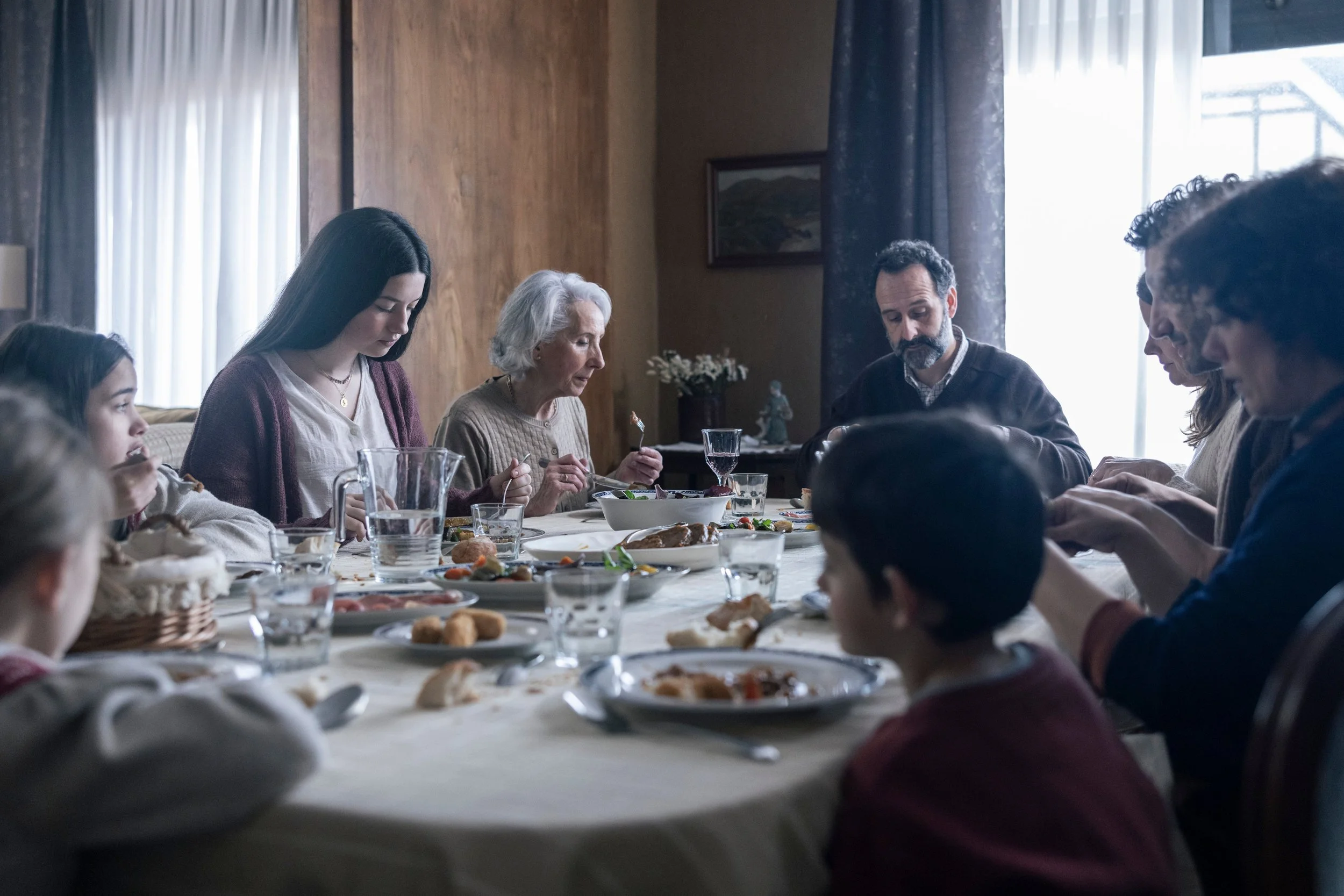
Set, and filmed, in Bilbao, the largest city in the Basque Country, the 116-minute-long film follows seventeen-year-old Ainara (Blanca Soroa) who, at the age most of her friends are deciding on what university they want to attend, announces to her family her intentions of pursuing a religious vocation as a cloistered nun. In one of Spain’s least religiously aligned regions, her decision absolutely disrupts the unspoken expectations placed upon a young woman of her age and social class.
Newcomer Soroa, who was chosen from more than 600 candidates in an open casting call to play Ainara, delivers a remarkably restrained and controlled debut performance. She captures Ainara’s introspective nature through doe-eyed lingering gazes and heavy silences, in a way that paints her in an almost saint-like manner, while simultaneously showcasing those small moments of doubt and uncertainty, in a way that ties her back to her human nature.
It’s in her relationship with her aunt, and staunch atheist, Maite (played by seasoned character-driven actress Patricia López Arnaiz) that the film finds much of its emotional tension. Positioned as Ainara’s foil, Maite spends much of the film dancing around her niece, carefully navigating their differences for fear of pushing her further away. Her concern is not simply from a disbelief in religion, but from a desire for Ainara to experience the world: to pursue an education, make mistakes, fall in love, and discover herself before committing herself to a convent. What emerges is a nuanced portrayal of two women firmly rooted in opposing perspectives, each driven by genuine love for each other alongside a stubborn conviction of their own truth, who are unable to simply just talk to each other.
The role of motherhood, and the various forms it takes, sits at the heart of Sundays. Ainara’s absent mother leaves a very noticeable void, from the pseudo-maternal responsibilities placed upon her by her emotionally neglectful father Iñaki (Miguel Garcés) to the maternal figures she finds in her aunt, grandmother Lila (Mabel Rivera) and, most notably, the Mother Superior herself (Nagore Aranburu). Her father’s preoccupation with his new girlfriend and the selfish loans he takes on for his restaurant only deepens this sense of emotional neglect, raising the possibility that Ainara’s religious calling offers not only spiritual fulfilment but an escape from the expectations placed upon her at home.
The film invites us to question what, exactly, is driving Ainara’s decision. Can she truly speak to God? Is this a genuine calling, or have the nuns taken advantage of a vulnerable, motherless girl? Is she searching for a new maternal figure, or simply trying to escape the role she has been made to play within her family? And, ultimately, does it even matter why? Sundays resists descending into a heated philosophical debate over the existence of God or the legitimacy of religious devotion. Instead, it focuses on the consequences of Ainara’s holy decision and the chaos it unleashes.
So if you’re into character-driven dramas, choir music, the religious imagery of the Mother and, most importantly, Nuns, then Sundays is the film for you.
Sundays in screening in cinemas now. For tickets and more information, click here.