
Europa Europa Film Fest 2026 - Afternoons of Solitude
Images courtesy of Common State.
This film is not for everyone. Reiterating the content warning I overlooked: serious animal harm; killing. At one point, I was rooting for the bulls.
Afternoons of Solitude (2024) is a hard watch. Albert Serra’s acclaimed documentary offers a disturbingly close look at Spain’s bullfighting spectacle. Entirely filmed in mid-shots and close-ups, you see bullfighting for all it is: tight-laced and sequinned machismo. And absolutely brutal.
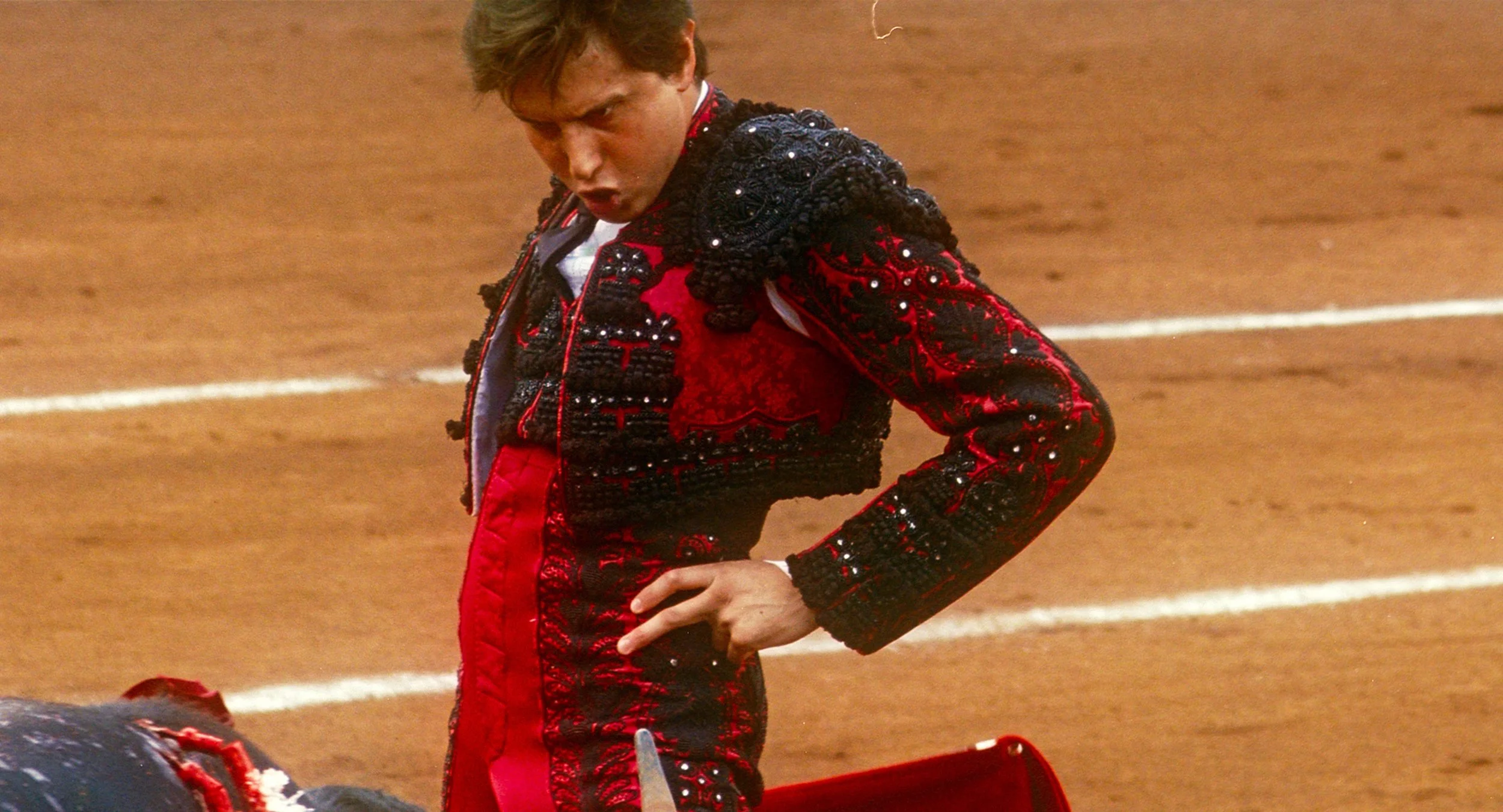
The film follows the young Peruvian matador Andrés Roca Rey, the ‘Messi of Matadors’. Filmed at different events, we see him going through the stages of bullfighting: getting dressed in the traditional traje de luces (suit of lights), praying to a Virgin Mary icon, the actual bullfighting in the arenas, and the post-event banter in the minivan with his cuadrilla (bullfighting team).
Interestingly, the documentary takes an observational approach which suits the slow cinema style Serra is known for. There are no interviews, voice-overs, text overlays or even B-roll footage to give additional context. It is filmed in four arenas in different Spanish cities but you can barely tell them apart as the camera remains in the bullring with the matador, bulls and the cuadrilla. It feels immersive but also repetitive.
Despite being the central figure, the film doesn’t divulge anything about Roca Rey outside of bullfighting. He doesn’t speak much and gives little away in his expressions. I noticed only a few potential glimpses of his inner world like when he’s kissing a Virgin Mary icon, and a moment where he questioned his luck after surviving being pinned down by a large bull. Given the violence we see he is capable of, the film left me questioning his mental state and whether being on-camera influenced him to appear more serious or ‘professional’.
I also wonder this about the cuadrilla members who demonstrate another side of masculinity. Their loud, macho commentary makes up most of the film’s dialogue. They constantly praise the star calling him ‘one of the greats’ or telling him he’s got ‘the biggest balls in the arena’. Personally, I’d give the ‘biggest balls’ award to Serra’s three camera operators who endured capturing all these bullfighting shots on-the-ground.
The observational style over the long, 125 minute runtime makes it all the more brutal to witness the graphic bullfighting scenes – which take up most of the screen time. The first, long uninterrupted fight lasted over 30 minutes. I cried. In all its brutality, blood and bravado, the camera never strays.
Even watching this from the comfort of a cinema, I noticed many people around me flinching, covering their eyes, and a few leaving early.
Artur Tort’s cinematography and colour grading really highlight the details in this film, the beauty and the gore. While the warm, muted colour palette gives the film a vintage look, it is graded so that red is the brightest hue. This emphasised the sparkling sequins of the matador’s clothing, the red capes and the glistening blood streaming down the bulls’ bodies. The orchestral musical score adds to the timeless feeling of the film which, like the bullfighting tradition, feels like it’s from a different era. I also appreciate how the film captured the matador’s dance-like movements in the face of danger.
While the film doesn’t condemn this controversial tradition, it doesn’t glorify it either. It doesn’t show the full size of the arenas, nor the audience members. We don’t see any of the festivals or celebrations associated with bullfighting events.
Through Serra’s slow, observational direction, and Tort’s cinematography, we get an honest look at how the matador is beautifully dressed and moves with artistic flair, but he taunts, tortures and kills bulls with the help of his sidekicks, in front of an audience. On repeat.
The film only affirmed my stance against bullfighting. I was already aware of the violent, controversial nature of this tradition after living in Spain, however where I lived, Catalonia, it’s been banned since 2010. Being a Catalan filmmaker, I made the mistake of assuming that Serra’s direction might reflect this stance more, but instead it’s more in the style of letting the bullfighting speak for itself.
I can appreciate Afternoons of Solitude’s honesty and Serra’s immersive style, but this film has left me with the horrific imagery of life draining from the eyes of multiple bulls. And men’s unashamed cruelty in the name of tradition. I can’t say I enjoyed it but it was certainly impactful.
2.5 out of 5 severed bull ears.
Follow Maria on Instagram and Letterboxd.
Afternoons of Solitude screened as part of the 2026 Europa Europa Film Festival, which runs from February 19th to March 19th, with select encores running till March 26th. For tickets and more info, click here.
It is also screening at select Australian cinemas until April 2026. More info here.