
Images courtesy of Palace Films.
Do you have a firm conviction?
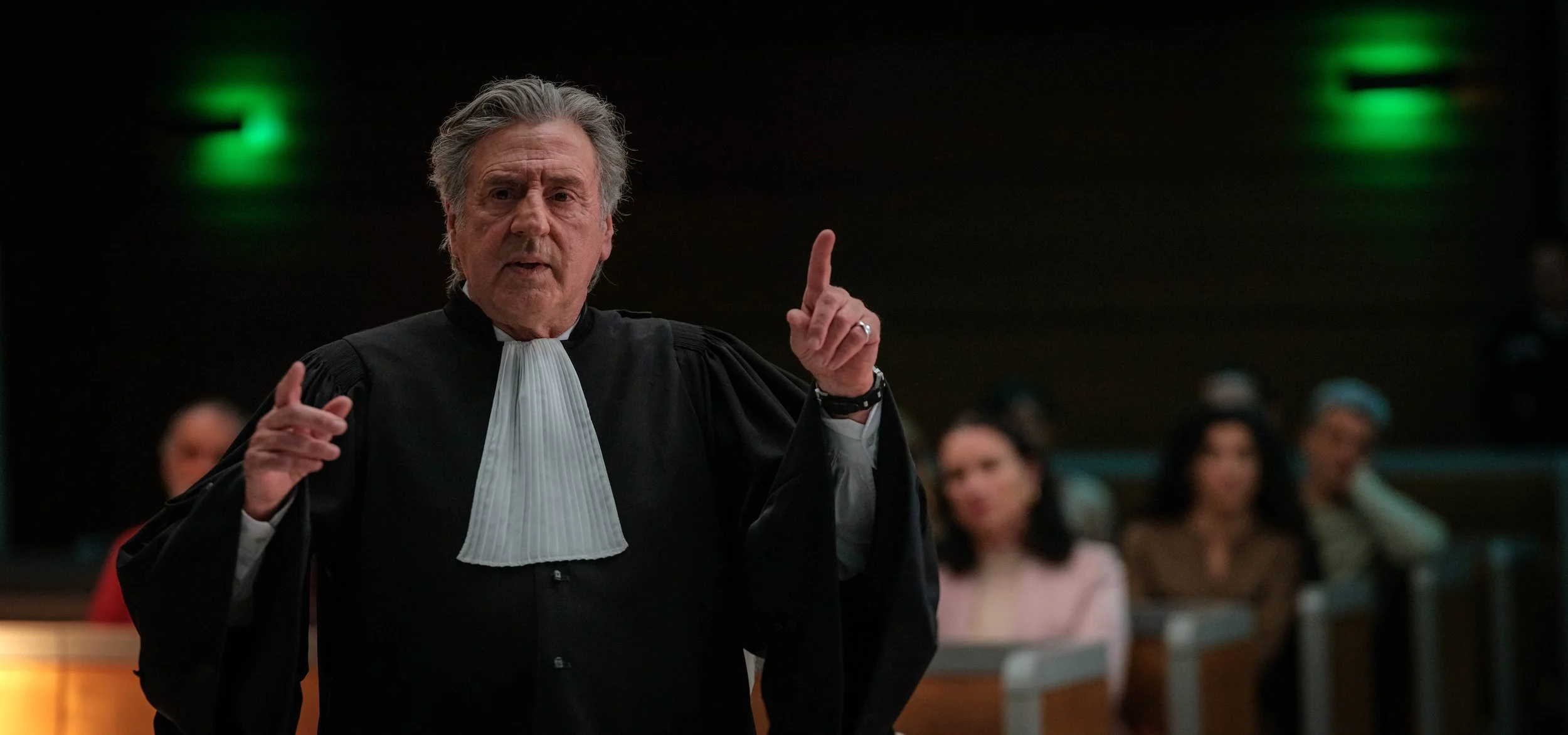
Co-written, directed, and starring acclaimed actor Daniel Auteil, The Thread (2024) is an understated courtroom drama that is guaranteed to leave you questioning absolutely everything by its end. An adaptation of Le Livre de Maître Mô - a collection of legal accounts by French criminal lawyer and blogger Jean-Yves Moyart - the film explores the complexities of justice and the desperate search for redemption. Disillusioned lawyer Jean Monier (Daniel Auteuil) begrudgingly agrees to take Nicolas Milik’s (Grégory Gadebois) statement as a favour to his partner and fellow lawyer Annie Debret (Sidse Babett Knudsen). Milik, an unassuming father of five, has been accused of killing his troubled wife, and as Monier questions him on the events of that evening he becomes assured of Milik’s innocence. What should have been a simple one-off meeting before Debret takes over the case instead reignites the long-dormant passion in Monier and gives him a compelling reason to defend someone for the first time in over a decade.
Monier becomes consumed by this case, his actions transforming into those of a desperate man seeking redemption as he gently unravels in the years building up to the court proceedings. His professional life bleeds into his private, aided by a complete lack of boundaries amongst his professional colleagues and personal relationships. Auteil is gripping, deftly portraying the quiet deterioration of a defender that has become all too consumed in ‘saving’ his defendant, playing Monier with such a fine understanding. For Monier it’s not just about setting an innocent man free but rewriting history, as he is haunted by the memory of a client he acquitted ten years ago who went on to reoffend.
My only real complaint is how little we learn about this re-offending client. The case itself is barely brought up, as the audience’s understanding is shaped entirely through Monier’s behaviour in the current trial. While this may have been an artistic choice, it risks reducing a potentially powerful narrative thread to little more than an unexplored shadow over the main story. Similarly, the side story of the bullfighter on trial seems intended to mirror something regarding Monier’s own moral conflict, but the connection is too vague and never fully realised. Likewise, the (admittedly beautifully shot) repeated scenes of bulls charging around, presumably meant to symbolise redemption, obsession, or something similarly deep, are poorly handled and underdeveloped. They feel less like a meaningful expansion of the film’s themes, and more like a missed opportunity to paint something larger; the type of imagery you doggedly shove in to achieve the facade of artistic depth.
However, the translated title itself is cleverly self-referential, alluding both to the physical thread found at the crime scene and to the thread of destiny, rooted in classical Greek mythology through the Fates who determine the preordained outcome of mortals and gods alike. This connection between choice and destiny underscores the film’s central tension of how confident anyone can truly be when faced with the gravity of deciding a man’s fate. By the final act The Thread quietly upends everything you thought you knew about justice, leaving even the most attentive viewers reeling as they are forced to reconsider earlier events and dialogue in a way that lingers long after the credits have finished rolling.
So if you’re into moral ambiguity, questionable bull imagery, sickening twists, and Pure French Cinema then The Thread is the film for you.
4 out of 5 stars.
The Thread is screening in cinemas now. For tickets and more info, click here.