
MIFF 2026 - Species Review: Marion Le Corroller’s Mixture of Message and Meat is Visceral and Underdone
Images courtesy of WTFilms.
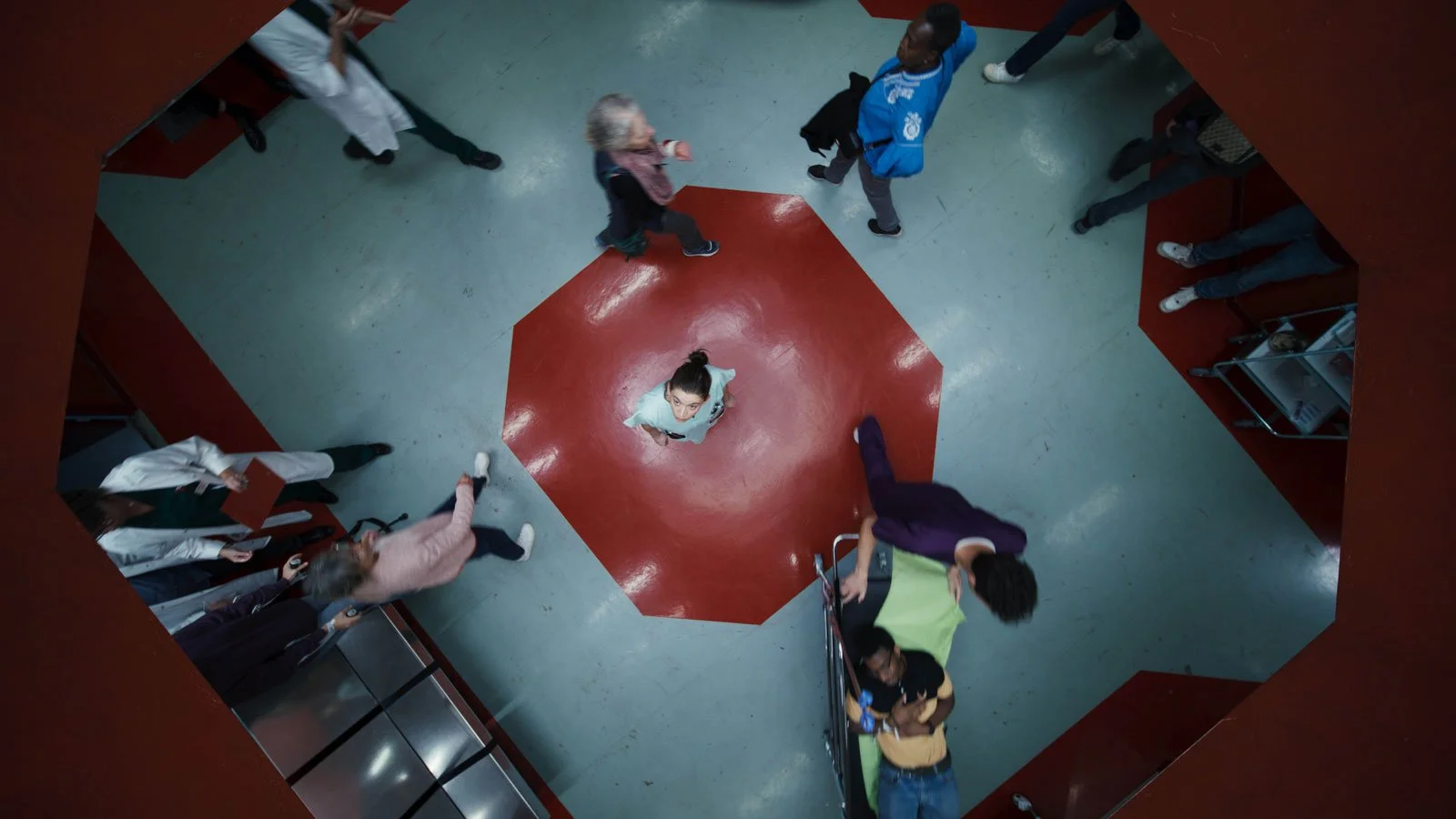
Marion Le Corroller’s directorial debut, Species, seeks to interrogate the working world through the eyes of Margot, freshly graduated from med school and eager to prove herself as the first academic in her family. Following a string of undiagnosable patients whose symptoms differ wildly—except for a shared trait of spontaneous, unexplained bleeding—the lines between nurse and patient begin to blur, leading Margot to believe she has also become a carrier for a new kind of infection.
The experience of watching the film is one that delights and frustrates in near equal measures. On a purely sensory level, it largely succeeds, delivering a potent blend of practical effects underscored by pulsating techno-influenced rhythms from composer ROB, along with a talented young cast—special shoutout to Mara Taquin in the lead role. Species (known in its native tongue as the far more distinct Sanguine) bookends itself with propulsive and stomach-churning set pieces, positively brimming with the feral energy that defined the French Extremity movement, beginning with a cashier's fast food freakout and—without spoiling too much about the specificities of the film’s final act—leads to a prolonged birthing sequence and a teeth-gritting open-heart surgery.
Where Species begins to flatline is in its prolonged middle portion, where very little happens outside the initial symptoms of infection and spicy mingling of co-eds. It's an abrupt change of flow after the simmering set-up, and, while made bearable by the likeable cast, it quickly becomes easy to get a few steps ahead of the film and recognise where certain pieces are going to fall into place. The film spends a frustrating amount of time fraternising, covering up wounds, and fretting about the trainee nurse rankings, tedium kicking in just like it would during a particularly uneventful shift.
Placing the body horror and medical procedural genres so close together is such a wickedly smart, natural blend that I can’t believe it hasn't been done before, and it leads to some terrific consequences for the narrative. Outside of Cronenberg's The Fly, it's rare to witness characters within a genre film like this so quickly catch on and intellectualise the phenomena they're experiencing. On the topic of similarities, there will likely be an unfortunate sense of familiarity to anyone who saw 2023’s smash hit The Substance, another body horror film made by a French director that features a prominent industrial electronic score. The reminiscent elements are largely in the actual presentation of the disease’s biological features (likely in part due to prosthetics sculptor Luigi D’Andrea working on both), with scars forming and melting away in clinical macro photography. There's even a “hatching” set piece that, while serving a different narrative purpose, elicits a comparable emotional response.
Thankfully, things really do ramp up after this point, as Species veers headfirst into the guts and glory at its core. It's a visceral palate cleanser that ensures the audience gets what they ultimately hope for out of a film like this, even as it clumsily mishandles its larger takes on the woes of being a youth in the working class. The film’s mixture of message and meat ends up half-baked, which begs the question: why attempt to introduce meaning in the first place, if all it really serves is a reveal about the cause of the infection? Where the very best of the genre thrives is not just in layers of skin, muscle, and sinew, but also thematically. In this aspect, Species aims for the top of its class, but falls into the trap of trying too much, offering frustratingly little flesh to back up its lofty ambitions.
Species screened at the 74th Melbourne International Film Festival. For more information, click here.
Follow Eli on Letterboxd, Twitter/X and Instagram.