
Images courtesy of Netflix.
Nearly a decade after his acclaimed arthouse thriller Burning, South Korean auteur Lee Chang-dong returns with another sophisticated examination of class division and exploitation in his home country. This time, the writer-director takes more of a realist approach to the subject matter, toeing the line between a political manifesto and a metafictional critique of artists who use the working class as props for their own agendas. Deeply informed by his experience as a playwright and novelist, Lee’s expert command of dialogue and scenography turns what could have been a weighty diatribe into a cerebral and humanistic breeze of a film.
Inspired by the Ssangyong Motors strike of 2009, Possible Love maps the tense interpersonal dynamics between laid-off worker Choi Ho-seok (played by Sul Kyung-Gu), his wife Mi-ok (Jeon Do-yeon) and documentary director Ye-ji (Cho Yeo-jeong, best known as the wealthy matriarch of Parasite), who is intent on interviewing them about a labour strike that ended in tragedy. As the shoot unfolds, the two women form a close friendship and Ye-ji’s filmmaking methods become increasingly cavalier, calling into question her own unconscious class-based biases. This is before mentioning the numerous other lines of philosophical and political inquiry that Lee thoroughly explores over the course of Possible Love’s near three hour runtime.
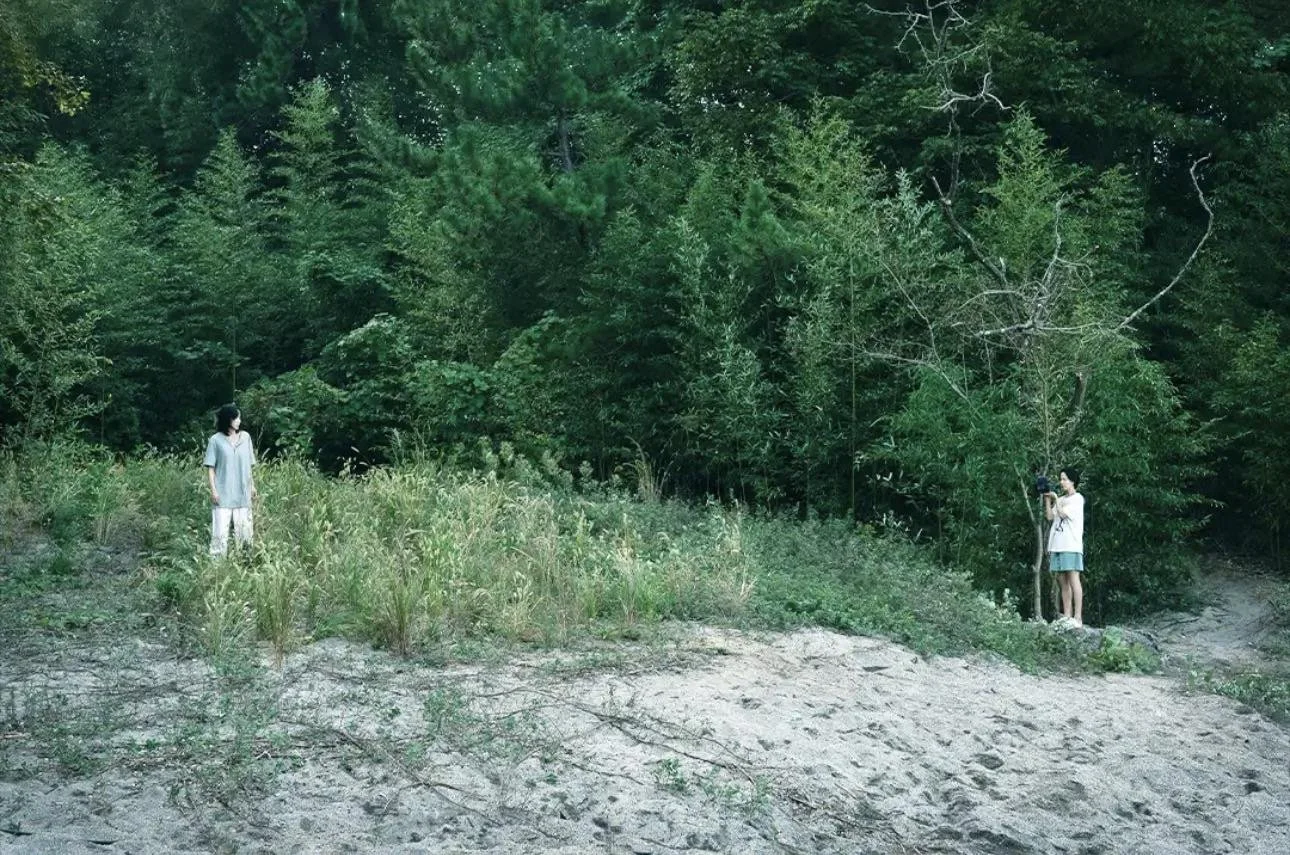
At the film’s moral core, however, is the issue of the gaze, or how a camera can be wielded as a weapon for both altruistic and exploitative purposes. Ye-ji is even called ‘Director Lee’ by her crew members, unsubtly indicating her role as a stand-in for the real-life director’s worst tendencies. Her lack of formality – failing to get Mi-ok to sign a release before going on camera, as well as filming Ho-seok and Mi-ok’s son Cheol (Jeong Seop) without permission – speaks to Lee’s fears of telling this story unprofessionally and at the expense of real-life workers. Cinematographer Kim Ji-yong further emphasises this moral concern with his reliance on ambient lighting, deliberately reducing the distinction between the look of the film and that of Ye-ji’s footage.
In spite of this level of formal self-consciousness, each exquisitely observed frame of Possible Love demonstrates that Lee’s fears are entirely misplaced, constantly revealing new aspects of his working-class characters’ humanity and innermost desires. This is particularly due to Jeon’s livewire turn as Mi-ok, a fiercely perceptive and funny woman who commands the camera and even bends it to her will for her own unionist interests. It is this interplay between artist and subject that gives the film such vitality; the Chois refuse to let themselves fall victim to Ye-ji and her wealthy mogul husband Sang-woo’s condescending gaze, leading to a tense and unpredictable third act set in the upper class couple’s luxurious beach house.
The final hour could stand alone as a flawlessly scripted chamber drama of class warfare, but its dramatic inflection points are only enriched by the previous hours of naturalistic conversations that have subtly built up to them. While Lee avoids entirely demonising his upper-class characters, the strength of his thesis comes from its refusal to offer easy answers or a conciliatory resolution to the two couples’ financial disparity. Love and friendship may be possible between the elite and the working class, Lee argues, but not in an unlawful economy where the former is continuously stripping away the latter’s humanity.
Possible Love releases on Netflix on Friday the 6th of November. For more information click here.
Follow Jodie on Instagram and Letterboxd.