The Social Reckoning Review: Sorkin’s Sorta-Sequel Has Nothing New to Report
Images courtesy of Sony Pictures.
Given the number of laboured literary references shoehorned into The Social Reckoning, it feels apt to liken this belated sequel to the Ship of Theseus: stripped of its original parts and refurbished entirely. Without David Fincher directing, Nine Inch Nails composing the score, or Jesse Eisenberg reprising the role of Mark Zuckerberg, the only creative force this new film shares with The Social Network is its notoriously verbose screenwriter Aaron Sorkin, also stepping into the role of director this time. Much like Theseus, the question hanging over Sorkin’s head is whether he can steer his bastardised ship home to even an ounce of the filmmaking glory that Fincher achieved in 2010. As soon as the first intertitle - “Prologue: White Girl Wasted” - flashes up onscreen, it’s clear that he absolutely can’t.
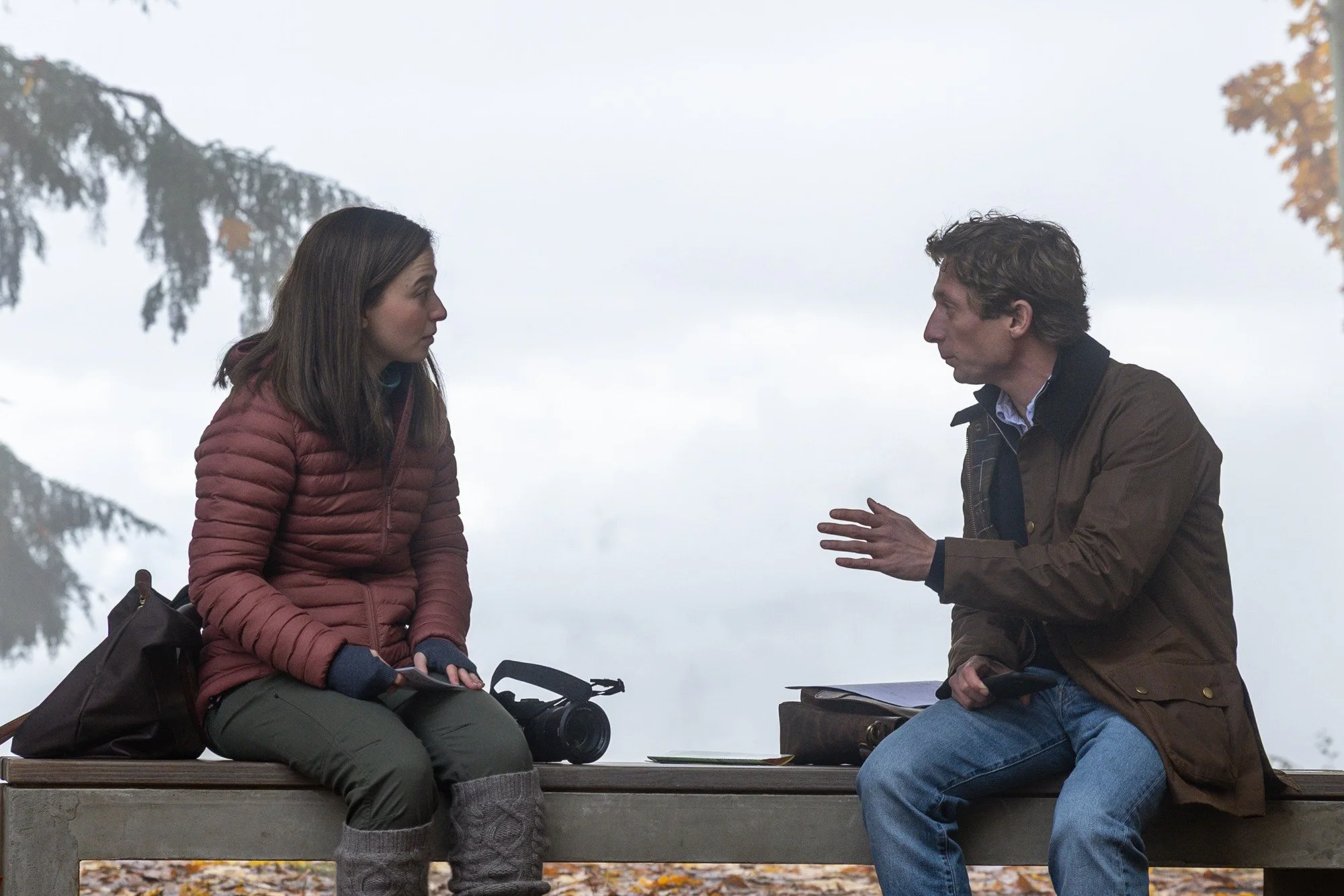
Opening on a hilariously overwrought scene of a one-dimensional ‘Karen’ livestreaming her racial abuse of two black and Latino cops, Sorkin cuts straight to Facebook employee Frances Haugen (Mikey Madison) watching the video online in 2019, horrified. The woman was a former friend of Haugen, sent down the alt-right rabbit hole by Zuckerberg’s (now played by Jeremy Strong) slack content moderation policies. And so, like any dutiful citizen, Haugen teams up with investigative reporter Jeff Horwitz (Jeremy Allen White) to expose her own company’s wilful promotion of hate speech and political misinformation.
What follows is a familiar Sorkin screed, tried and true since his very first screenplay for A Few Good Men: America’s institutions are failing, and it’s the little guy’s job to fix them with the power of liberal democracy and of course, the written word. In other words, this is the polar opposite of the first film’s acid portrait of a ruthless digital technocrat on the rise. It’s just hard to believe that Zuckerberg has faced any real personal ‘reckoning’ in the last decade, and insinuating that the rise of neo-fascism on Facebook has created a genuine moral crisis for this billionaire Trump donor rings entirely hollow.
If the original film managed to update Sorkin’s rapid-fire political rapport for the 21st century, then this follow-up is something of a degeneration, showcasing one of his sloppiest and most misogynistic screenplays to date. The writer’s Madonna-whore complex has never been more obvious, reducing almost every female character to an infantilised subordinate, sex object or in Haugen’s case, both. Unfortunately for the real-life whistleblower, it seems like Sorkin enjoyed Anora for the wrong reasons – he fabricates a truly ridiculous excuse to dress Madison up in the most revealing outfits possible. Meanwhile, White is short-changed in the role of Horwitz, written as an insufferable boor who regularly harasses a female intern, waxes poetical about the ‘great milieu of American musical theatre’ and even mansplains the concept of mansplaining. And he’s supposed to be our hero.
It’s almost a relief whenever the film cuts away to Strong’s brusque rendition of Zuckerberg, set a few years later in 2021 as a PR team preps him before his Congress appearance (a clunky on-screen sliding scale pops up every five minutes to denote the year we’re in). But the absence of Eisenberg and Fincher is most keenly felt in this segment: Strong is a capable actor but too caught up in replicating Zuckerberg’s tics, while Sorkin lacks Fincher’s impeccable eye for shot composition and blocking. Without a firm editorial hand, the film stumbles along to its sanctimonious shocker of an ending; Sorkin has never met a climax that he can’t telegraph with rousing trumpets. Stripped of the material pleasures of a court procedural, this is a toothless polemic that will ironically appeal most to Facebook boomers.
The Social Reckoning is screening in cinemas now. For tickets and more information, click here.
Follow Jodie on Instagram and Letterboxd.