
Cinema Reborn 2026 Film Review - The Wife of Seisaku
Images courtesy of Cinema Reborn.
Yasuzô Masumura’s The Wife Of Seisaku is a depiction of the fruits of prejudice. An unblinking demonstration of how negative thoughts are shared through generations, and how the rigidity these lines of thinking create can ruin lives. It’s a vivid, disturbing picture, but Masumura uses the misery not just as a means to show how deviant humanity can be, but to show that in small pockets, how some light shines through. These elements enable the film to act as both a tale of grief, but also set forward a message of hope - the contrast creating a uniquely moving experience.
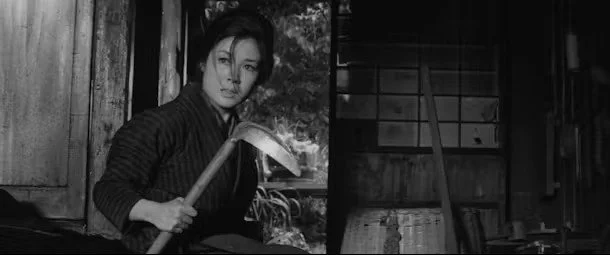
The Wife Of Seisaku (I’ll abbreviate it to just Seisaku’s Wife for simplicity) uses its first few minutes to initiate the audience with Ayako Wakao’s Okane and her plight; being the unwilling housewife to an old, retired man. This is all before she meets Seisaku, and we’re made to endure Okane taking up housework, bathing her husband, and sharing his “embrace”, all accentuated by a blankness in Wakao’s eyes and an oppressive score. Having been made to watch this suffering for longer than I’d like, I had the thought: why is she subjecting herself to this? But I was soon made to understand - she’s providing for her sick father and mother. Taking place at the forefront of the 1900’s, Seisaku’s Wife makes it clear that Okane’s social mobility is limited, and if she is made to suffer this old man's musings so her family survives, she is content to do it. While not in a conventionally “heroic” role, Okane’s selflessness in this situation is heroic, but this alternative view of the idea doesn’t just rest in Okane, but also the titular Seisaku.
When we meet Seisaku he’s returning from deployment in the great war. The showering of praise he receives is in such stark difference to Okane’s treatment earlier in the film that it’s almost staggering. Seisaku fits within a mould of traditional heroism and celebrations of militarism, and Okane is shunned for actions to support her parents, this contrast creating a rich, opposing thematic tension. Masumura uses this tension as a representation of what very clearly rests in the minds of the film's tertiary characters, and he lets it bubble for the majority of the runtime.
This is what makes Seisaku’s Wife so brilliant. You’re made to sit with the dour ideology of the film's world, and get to watch it subverted in the relationship of Okane and Seisaku. When these two characters are put together, it's very clear that the forces surrounding them are daring to pull them apart. Seisaku doesn’t consider Okane’s past a limiting factor in his wanting to marry her, and Okane still perseveres with the relationship in spite of the vitriol she faces because of it (and her past). The brief happiness these two get to experience is almost an affirmation against the negativity of the world of the film, but as the runtime marches on, Masumura makes the audience face the preverbal reality of the situation.
Without giving away too much, Seisaku's Wife ends in an explosion of violence. The facts limiting Okane and Seisaku’s relationship come into tension with the ongoing war and no one comes out happy. All this sadness is powerfully punctuated by the aforementioned score by Tadashi Yamauchi, and a rich monochrome palette which almost emphasises the warring ideas the film presents.
All this to say that Seisaku’s Wife is a must watch in theatres. Those who have the opportunity to experience it during Cinema Reborn’s upcoming screenings aren’t in for the most pleasant watch, but a nonetheless moving experience.
Follow James on Letterboxd.
The Wife of Seisaku is screening as part of the 2026 Cinema Reborn program, which runs from the 8th to the 20th of May at Lido Cinemas Melbourne. For tickets and more info, click here.