
The Odyssey Review: Nolan’s Ancient Greek Epic is a Revelatory Journey of the Soul
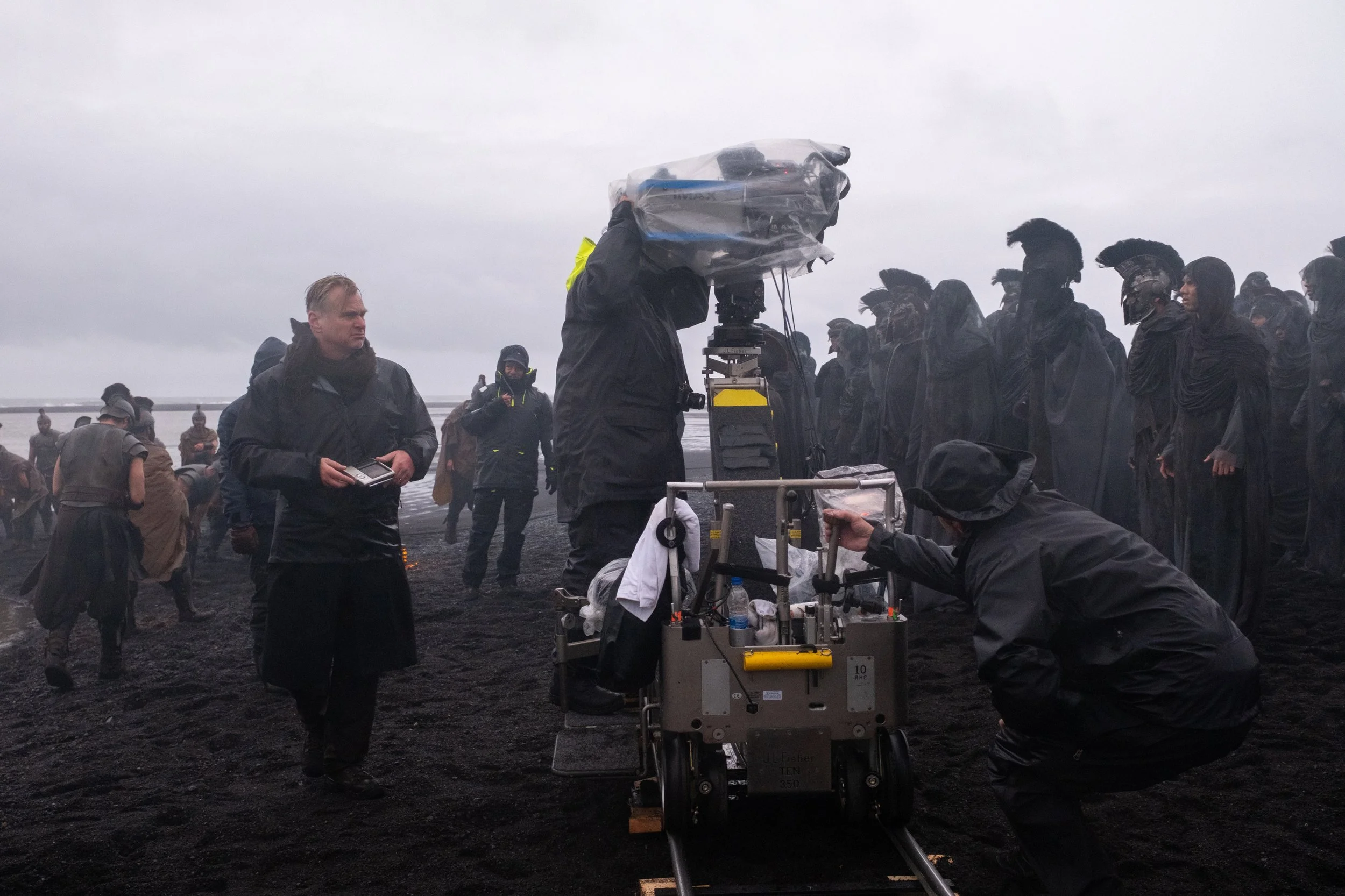
Images courtesy of Universal Pictures.
After sweeping the Oscars with Oppenheimer, Christopher Nolan has cashed in his $250 million blank cheque on a blockbuster reimagining of Homer’s legendary Ancient Greek saga. It takes an extraordinary amount of hubris to adapt such a cornerstone of literature on your own creative terms. By some miracle, Nolan delivers not only a moving cinematic epic in its own right but a meditation on his own relentless drive for greatness.
Largely in keeping with the narrative of the original poem, The Odyssey revolves around Greek general Odysseus (Matt Damon) travelling home to the isle of Ithaca after ten years spent fighting in the Trojan War. His voyage is delayed by wind, sea and divine intervention, sweeping him away on harrowing mythological detours. Meanwhile in Ithaca, Odysseus’ now-adult son Telemachus (Tom Holland) is stuck waylaying lecherous suitors begging for the hand of his mother Penelope (Anne Hathaway, on a fantastic run this year). The telling of the story is fragmented in Nolan’s typical non-linear fashion, which fits well with the spoken word testimonies of the poem.
As might be expected from the director who sacrificed the murkiness of Gotham City for the gleaming streets of daytime Chicago, the poem’s more fantastical elements are relatively toned down, aside from an errant Cyclops and a touch of witchcraft. Instead, the focus is squarely on the psychological portrait of Odysseus. Damon impressively embodies the character as both an unstoppable killing machine and a broken man, wracked with guilt over his part in the brutal sacking of Troy. This is familiar thematic territory for Nolan, combining the tragic genius of Oppenheimer with the estranged fatherhood of Interstellar. Thrillingly, his ambitious screenplay takes these recurring obsessions even further, interrogating the Ancient Greek principle of hospitality on both a familial and political level. It’s no surprise that an age-old parable about interstate paranoia and genocide remains politically relevant to this day, but Nolan still manages to find a heartbreaking new angle on Odysseus as a silent enabler of unfathomable violence.
From a craft perspective, The Odyssey is unsurprisingly impeccable. Editor Jennifer Lame’s cutting shapes a coherent and grounded emotional arc for Odysseus from a reported 100 hours of lengthy battle scenes, maritime chaos and supernatural grandeur. Ludwig Görannson continues to cement himself as one of the most committed composers in Hollywood, relying on Ancient Greek instruments like the lyre and aulos to score the film with thrumming dread. And in a stacked phalanx of A-listers, it’s the smaller supporting roles that shine – Elliot Page as the cursed soldier Sinon, Samantha Morton as a deliciously grotesque Circe and Lupita Nyong’o on astounding double duty as Helen of Troy and her twin sister Clytemnestra.
Structurally, Nolan’s Achilles heel is his obvious disinterest in the wild episodic digressions of the original poem. This is especially evident in how he handles the Cyclops’ chapter of the story, forgoing much of its trademark wit for a dull exhibition of some admittedly excellent animatronic work. The same goes for his sanitised take on the cannibalistic Laestrygonians and too-short excursion into body horror on Circe’s island. It’s perhaps unsurprising given his prior tendencies for the dour and humourless, but a shame nonetheless. Where Nolan does show staggering growth as a writer is in the film’s final hour, emphasising raw and unflinching self-reflection over spectacle - although there’s still plenty of the latter in the film’s ferocious final brawl. What’s most impressive about The Odyssey isn’t its scale - it’s that the bigger Nolan’s filmmaking gets, the more human it becomes.
Follow Jodie on Instagram and Letterboxd.
The Odyssey is screening in cinemas from Thursday the 16th of July. For tickets and more info, click here.