
La Bola Negra Review: Los Javis’ Sprawling Period Piece Glosses Over Spain’s Queer History
Images courtesy of Rialto Distribution.
An intergenerational saga covering almost a century of Spanish history, La Bola Negra is the staggeringly ambitious passion project of directors Javier Ambrossi and Javier Calvo (known colloquially as ‘Los Javis)’. The film’s title takes on three different meanings over the course of the film: the name of an unfinished play by the famed Spanish poet Lorca, a reference to the literal ‘black ball’ used to vote against a suspected homosexual character, and a larger metaphor for the historical exclusion of the gay community from public life in Spain. Perhaps it’s inevitable that Los Javis’ overstuffed script buckles under the weight of all these ideas.
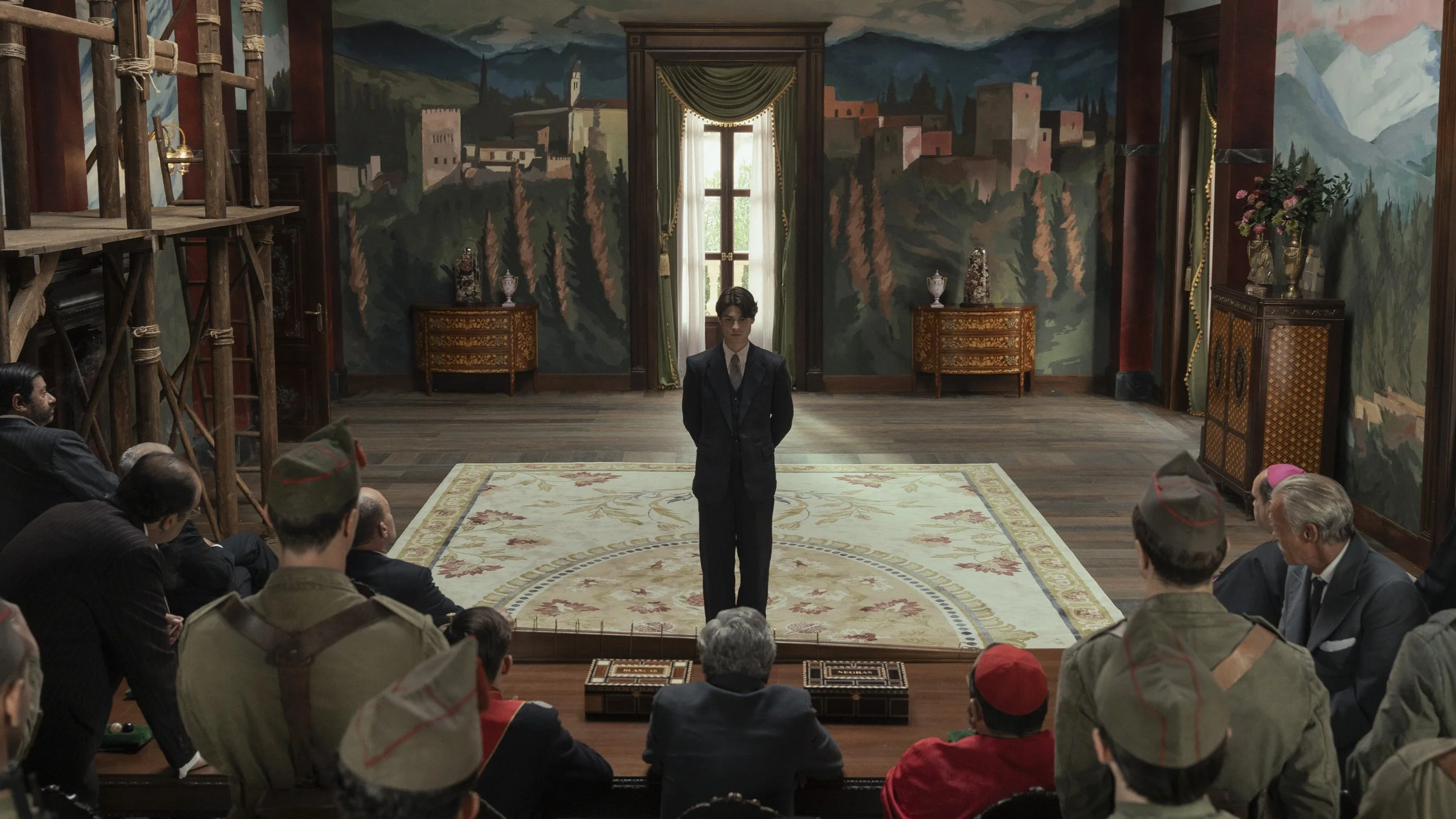
Structured as a triptych of intersecting storylines, La Bola Negra’s earliest tale follows a wealthy young man (Milo Quifes) blackballed from his homophobic local casino in 1932. Five years later in 1937, a closeted conscript in Franco’s Nationalist army (Guitarricadelafuente) falls for a Republican prisoner-of-war (Miguel Bernardeau). And closer to the present day in 2017, a troubled academic (Carlos Gonzalez) discovers a family inheritance that links all three timelines. Los Javis’ flair for spectacle is on display from the opening action setpiece, dropping the audience straight into the brutal slaughter of the Spanish Civil War; later on, this ferocious energy is redirected into an emotionally charged flamenco sequence. Cinematographer Gris Jordana is without a doubt the star player of La Bola Negra: her elegant compositional eye helps to ground much of Los Javis’ preachy dialogue and embarrassingly blunt symbolism.
Bluntness is really the name of the game here. $20 million is a historic budget for an independently produced queer film, and this financial pressure has seemingly forced the film into being as palatable to the general public and awards shows as possible. Any actual queer sexuality depicted is largely sanitised, presumably with straight audiences in mind; the only onscreen sex scene is a choppily edited and unerotic Grindr hookup. In attempting to appeal to everyone, La Bola Negra only exposes its blind spots in regards to intersectionality – a statement about the silencing of women plays as an unintentional gag, given that the female character who voices it never gets to speak again. The film’s sole allusion to transgender identity is a cringe-inducing line delivered by Penélope Cruz with all the political intensity of an AI-generated Almodóvar quote.
Los Javis’ desperation to please every viewer is most apparent in the film’s plodding final act, tying up and overexplaining every single narrative thread to the point of tedium. Compared to last year’s The Secret Agent, which used incomplete historical documents as a powerful narrative framing device, La Bola Negra refuses to let the past remain fractured. By giving its fictional queer characters the most saccharine resolutions possible, the film avoids raising any real questions or concerns about the resurgence of fascism and homophobia in the modern day. La Bola Negra is undeniably a sweeping and decadent feat of filmmaking. It’s also the kind of politically complacent Oscar bait that should have been left in the past.
La Bola Negra opens in cinemas on Thursday the 15th of October. For tickets and more information, click here.
Follow Jodie on Instagram and Letterboxd.