
NOR26 Film Review - Fjord
Images courtesy of Madman Entertainment.
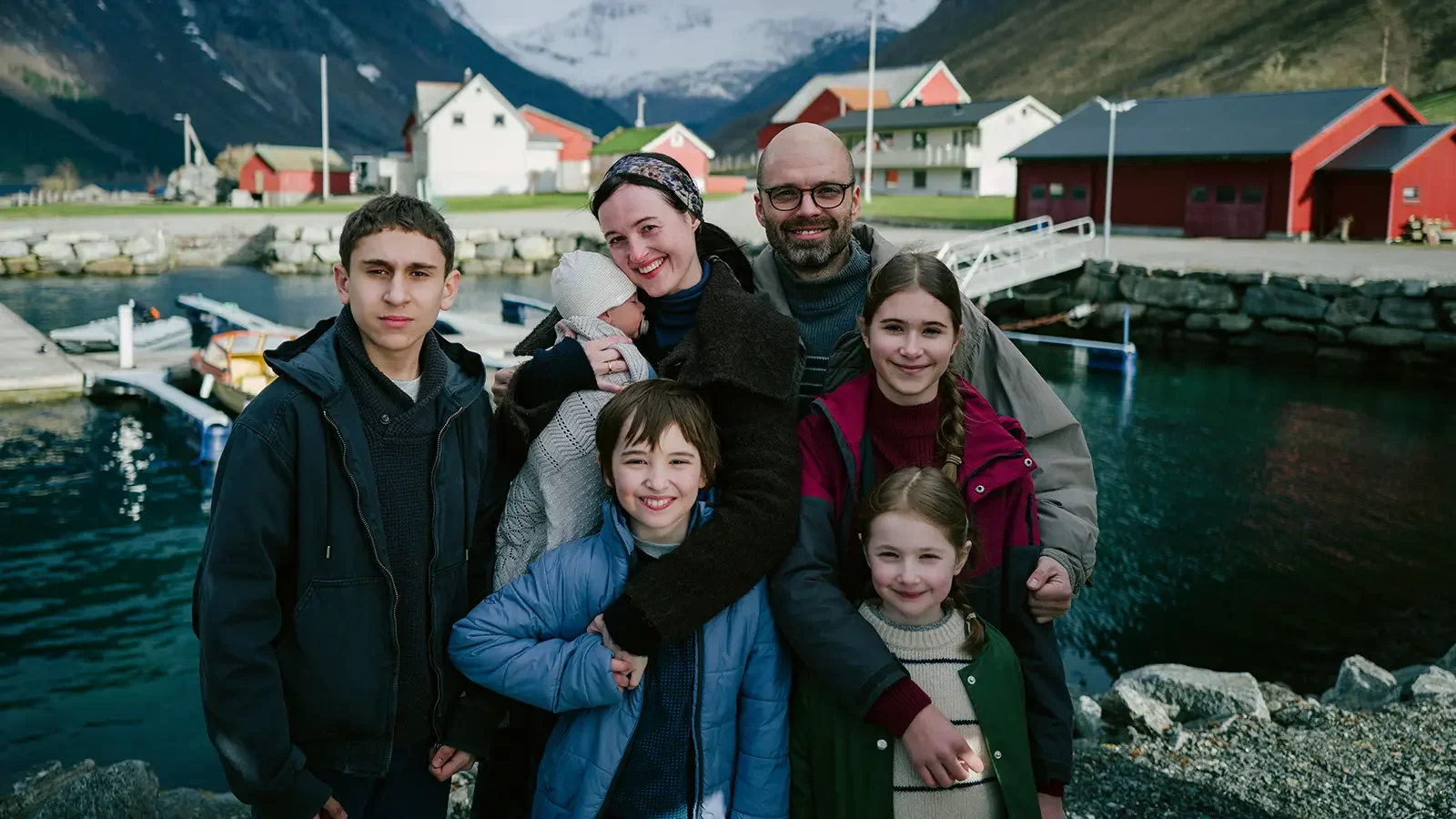
Cambridge Dictionary describes a Fjord as ‘a long strip of sea between steep hills, found especially in Norway,’ and watching Christian Mungiu’s new Norwegian set film – its cinematography so intertwined with beautiful Norwegian mountain landscapes – it would be hard for anyone, even unfamiliar with its definition at first, to forget its title’s meaning.
Mungiu is a Cannes favourite, and Fjord received a mighty twelve minute standing ovation at the festival this year before taking home its highest award, the Palme d’Or, the second in director Mungiu’s trophy cabinet behind his 2007 win for 4 Months, 3 Weeks and 2 Days.
Fjord has lots in common with the former, and the rest of Mungiu’s work, being a commentary on European culture and politics. It depicts the Gheorghiu family, who have recently moved from Romania to their mothers native Norway. They’re a “familia tradițională” who immerse themselves in deeply religious education and conservative ideology. The Gheorghiu children don’t have mobile phones, and must complete a mandated amount of prayers. Their lives are a stark difference to the new Fjord town the family has moved to; it’s as liberal as a town can be, and while the Gheorghiu’s try to fit in with their cultural differences, it’s hard when the high school that the eldest children attend strictly bans religious chatter. After bruises are found on their eldest daughter at school, the family’s mother and father are placed under heavy scrutiny. While not directly based on, the film is heavily inspired by a real Norwegian case in 2015 – along with others that were personally interviewed by Mungiu – in which the children of the Bodnariu family were separated from their religious parents based on corporal punishment allegations.
While Fjord does give equal time to the Gheorghiu’s eldest children in the beginning, it becomes clear that Sebastian Stan and Renate Reinsve are the leads, starring as father and mother Mihai and Lisbet Gheorghiu. Both actors are on incredible runs, with Academy Award nominations for The Apprentice and Sentimental Value respectively, and Fjord is just an extension of this fantastic stretch of performances. They’re both in a way unrecognisable. Stan flaunts a bald head that shines in the Norwegian summer and reflects its blue hue in the winter. It’s his first time leading a non-American production, allowing his Romanian heritage to shine. He’s scary without having to do anything truly frightening, tying in to the uneasy aura the film has. Reinsve’s transformation isn’t as physically drastic as Stan’s, yet her glasses and head scarf make her still seem a completely different person. She’s the opposite to her co-leads anger, she deals with her trauma quietly, in a deep state of melancholy for the majority of the film.
The dichotomy between the husband and wife is made very apparent, from their cultural background to their difference in dealing with their ongoing legal battle. Lisbet attempts to play by the rules in the beginning, but when this results in little action, Mihai advocates going larger in scale, involving the public in their dispute, in a way that ruins one of the best aspects of Fjord, that being that it takes place in a small community. When social media signatures start to get involved in the family's business, the excellent quiet drama of the film goes away for a time, though it does back by the end.
I would suspect that Mungiu does not expect a majority of his audience to agree with the ways of the Gheorghiu family, in fact I would go as far as to say he doesn’t want you to. Instead, he poses a far more interesting predicament; can we sympathise with those we don’t agree with? When Mihai says his children will “be cheerful when they’re grown ups” it’s easy to immediately paint a picture of who this man is. But when he’s grilled by Norwegian authorities in a language he himself struggles to speak, the picture becomes a whole lot harder to figure out. That’s not to say that Fjord is defending Mihai and Lisbet’s choices of parenting, nor is it a spiritual film that depicts the Gheorghiu’s religious lives as the only right way to live, it’s just merely laying out every single side to this affair.
The Gheorghiu family's neighbours are then the perfect representation of this; Mia (Lisa Carlehead) and Mats Halberg (Markus Tønseth) are almost an audience surrogate, or at least a surrogate for Mungiu think the audience are. They’re friendly neighbours, who help the Gheorghiu family even after the local community has turned against them. Yet, they are still one to judge the religious practices of Mihai and Lisbet, and their parenting practices, even while they ignore their own daughters' worries.
This is what makes Fjord a great film. It asks difficult, and at times self-confronting inquiries. Should cultural judgements be made in law? Is conservatism wrong? Is progressivism right? How can a society label itself as open and forward looking when it passes heavy judgment on those who are different? If you’re looking for answers, Mungiu and his film don’t have them, just the questions. It’s up to you to decide how you want to answer them.
Follow Kayne on Letterboxd and Instagram.
Fjord is screening as part of the 2026 Hurtigruten Nordic Film Festival from Thursday the 9th of July. For tickets and more info, click here.