
Film Review - 28 Years Later: The Bone Temple
Images courtesy of Sony Pictures.
28 Years Later, the third installment in the zombie franchise created by director Danny Boyle and writer Alex Garland, was only released seven months ago. Nevertheless, it is time for viewers to be thrown back into this brutal and visceral post-apocalyptic world with 28 Years Later: The Bone Temple. This time, Candyman and The Marvels director Nia DaCosta takes the reins.
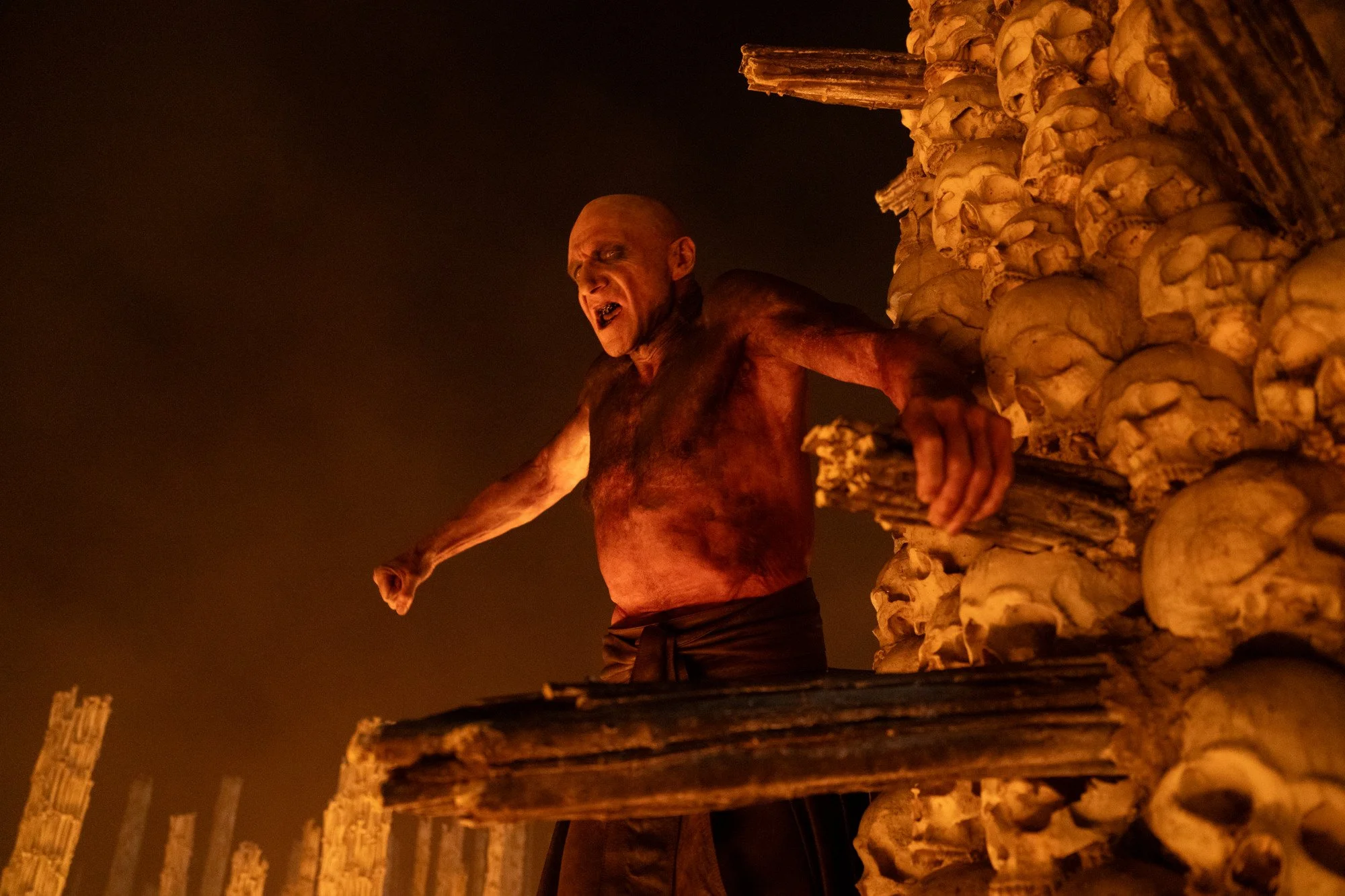
The film picks up right after its predecessor’s polarising ending, which saw a terrified young Spike (Alfie Williams) inducted into Jimmy Crystal’s (Jack O’Connell) Satan-worshipping gang after trying to save his sick mother (Jodie Comer). To this sadistic group, the infected who roam the mainland post-Rage Virus are merely obstacles in their path, as they go around skinning innocent people in the name of ‘Old Nick’, and wearing bleached-blonde wigs inspired by predatory media personality Jimmy Savile. Yes, it’s as bizarre as it sounds. While Spike is trapped in this nightmare, Dr. Ian Kelson (Ralph Fiennes) is still continuing his work to understand the virus that ravaged the world, with the unlikely hope of finding a cure. Remaining at the bone temple memorial he created for the victims of the outbreak, he is frequently visited by a ferocious Alpha infected (Chi-Lewis Parry), who he fondly names Samson. By shooting Samson with a morphine-xylene infused dart, Dr. Kelson is able to sedate him and spend time near him without being attacked. As Samson becomes addicted to the drugs and keeps returning to the bone temple in his lucid state, Dr. Kelson begins to enjoy his company, and the pair form a friendship of sorts. Dr. Kelson continues to study Samson’s brain, and what he discovers is groundbreaking.
If you thought you’d seen everything this franchise has to offer, think again. Nothing can quite prepare you for the bold, unrelenting and utterly insane Bone Temple, which easily cements itself as the wildest and best film of this series so far. Disturbing, hilarious and moving are all words that can be used to describe it as a whole, despite them being antonymous with one another. While the previous films have focused on the infected being a threat to mankind, DaCosta shifts gears here and makes the humans the monsters instead. Jimmy Crystal and his followers not only represent the worst of humanity, but rather, a lack of humanity at all, as they mercilessly torture and murder, which is incredibly difficult to watch. These make for the most grim scenes in the film, and will leave viewers thinking that the infected aren’t actually that bad. It all comes together thanks to O’Connell’s brilliantly flamboyant and macabre performance as the tracksuit and tiara wearing cult leader who believes himself to be the son of Satan. The other major storyline, focusing on Dr. Kelson and Samson, comparatively represents the best of humanity, as the pair form a strangely moving bond in what has to be the most unlikely friendship ever put to screen. This is also where a lot of the film’s humour comes from, which is much needed to balance out the bleakness. Fiennes absolutely shines in his role, embracing the absurdity and endearingly kooky nature of his character, and steals every scene. There is one particular scene near the film’s end, accompanied by an Iron Maiden needle drop, that may be one of the best (and funnest) performances he has ever done.
28 Years Later: The Bone Temple is game-changing and glorious, making for the first great movie of 2026. DaCosta announces herself as an incredible filmmaker who demands be kept on for the remainder of this series.
Follow Alyssa on Letterboxd and Instagram.
28 Years Later: The Bone Temple is screening in cinemas now. For tickets and more info, click here.