
Backrooms - Everything Must Go Review
Images courtesy of A24.
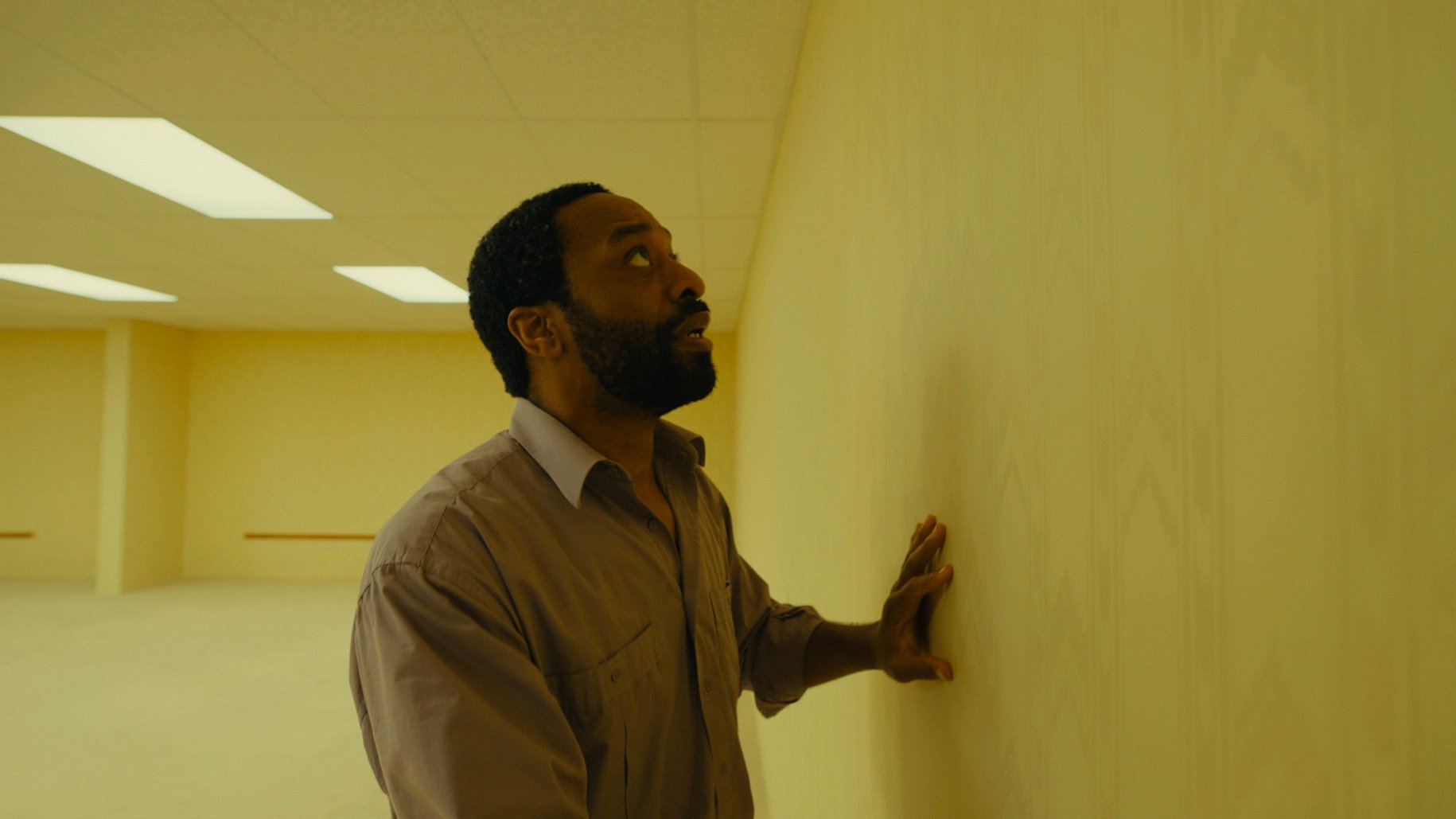
Kane Parsons’ Backrooms: Everything Must Go expands on his feature-length spin on the titular Creepypasta, through a 15 minute post credit scene. The film itself, already A24’s highest grossing box office endeavour, uses its cinematic nature to deepen and enrich this world of mono-yellow wallpaper and fluorescent lighting in new and, at times, surprisingly mature ways.
We follow Clark (Chiwetel Ejiofor), a supposed architect who loathes his job as manager of a failing furniture company, as well as his therapist Dr. Mary Kline (Renate Reinsve). Upon discovering a rift between reality and an alternate dimension made up of disjointed office rooms and uncanny pieces of furniture, the two begin to spiral into a Möbius strip of their own personal traumas. Given the very concept of the Backrooms, this pairing of professions makes any inherent subtext about both the physical geometry, and its psychological properties, far more literal and easy to digest for newcomers.
On the other hand, anyone already familiar with the YouTube series will find plenty to adore here, with long stretches spent exploring the hallways of the titular complex.. This tightrope walk between the two worlds is no meager feat, but the film tries to have its cake and eat it by offering a surreal slow burn that explains itself just a little too plainly. The result is a film that seems too esoteric for general audiences, but not quite ambiguous enough to fully satiate the arthouse crowd. For those able to tune in on the film's exact frequency, there's a lot to love amidst the dense and pervasive atmosphere, with a terrifying found footage sequence around the midpoint truly shining.
It's in this style that Kane seems to be most comfortable, and this grainy VHS aesthetic feels most true to the ethos of the source material. Even the very first image associated with The Backrooms as an online horror phenomenon quite literally was Found media, a seemingly innocuous digicam photo taken mid-renovation of a furniture store repurposed on 4chan’s paranormal board, known as “/x”. The analog textures lend themselves well to something so inherently uncanny, rooted in the corruption of nostalgia. Likewise, the new addition of post-credits footage ties back to the computer animated humble origins of Parsons’ work, offering dedicated fans an excuse to sink back into theatres for a reminder of just how interesting this world truly is. All of these elements blend together to give Backrooms a timeless and unique quality, where each character's relationship to the complex is a mirror to who they are.
The intentionality of each element becomes most clear when viewed through Parsons’ motif of the sea – a gull trapped within the infinite hallways, Clark's pirate costume, and the ingenious naming of his furniture store, The Ottoman Empire. Much like the sea, the Backrooms themselves swallow and degrade, with each passing wave slowly and subtly chipping away at what was, revealing a new form entirely. Throughout both the film and accompanying shorts, it becomes clear that there isn't a desire to paint humanity in an overtly negative light, instead empathising with our natural curiosity. Of course early explorers stood on shores, looking out across the vast and deep blue plateaus before them, dreaming about how they might one day set sail.
Follow Eli on Letterboxd, Twitter/X and Instagram.
Backrooms: Everything Must Go is screening in cinemas now. For tickets and more info, click here.