
Film Review - One Battle After Another
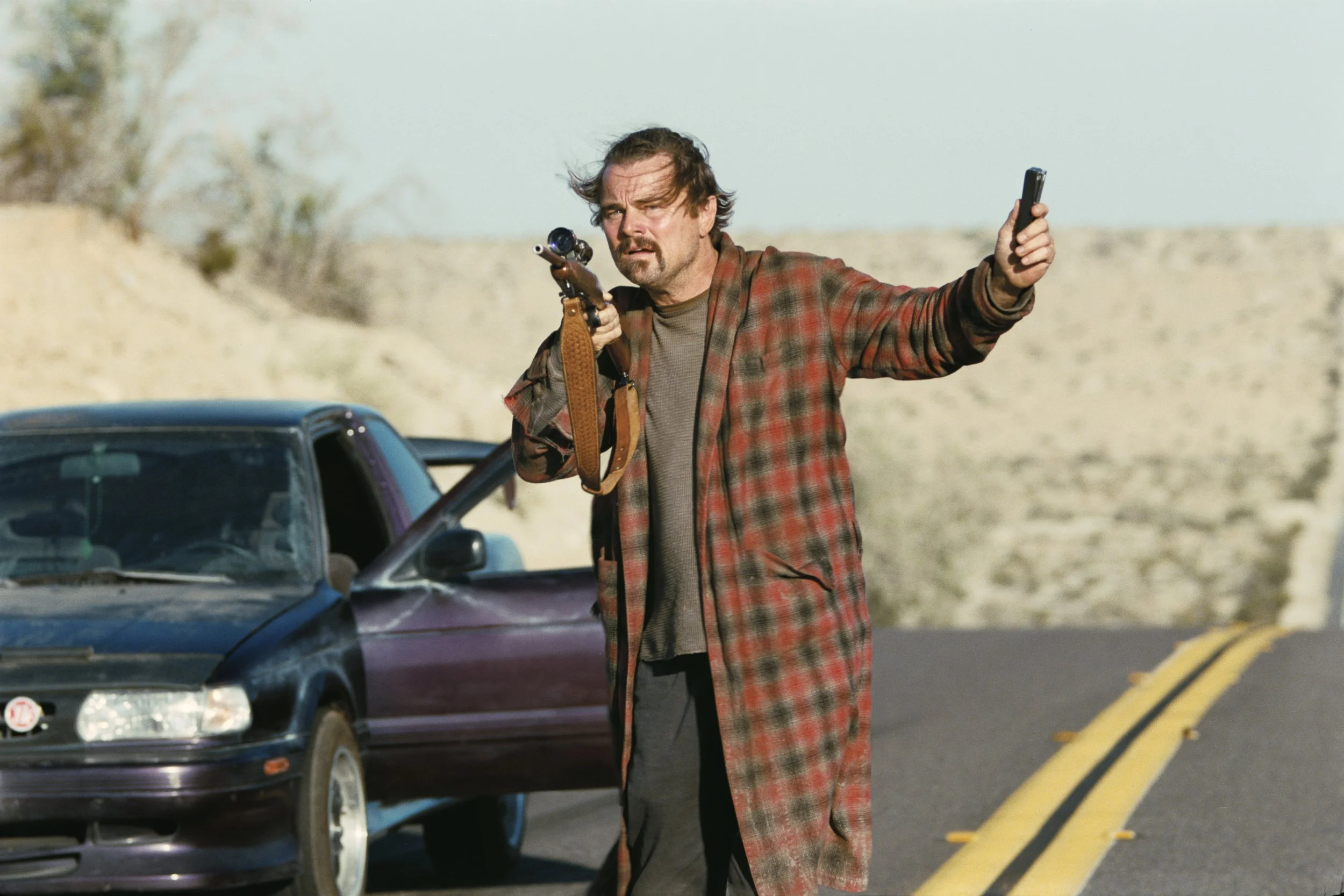
Images courtesy of Warner Bros. Pictures.
After years of popular discourse about revered writer-director Paul Thomas Anderson’s evasion of modern-day settings, his new film is just about the most searingly contemporary work you could imagine. One Battle After Another is an instant classic: a restless, thrilling action flick that’s concerned not with some war in a fictional universe or far-off land, but an honest-to-god boots-on-the-ground war within modern America. The villains in this war are the forces of the government: the cops and soldiers that enact the state violence enabled by ethnonationalist, reactionary policymakers like (though he is never directly referenced) the sitting U.S. president. Our protagonists, in turn, are those the government persecutes – the families and communities that organise, and take up arms, to protect the undocumented immigrants and marginalised groups that the government seeks to stamp out.
A narrative of this kind – that takes sides in this way – is perhaps not unheard of, at least as subtext, in modern Hollywood filmmaking. An excellent recent example might be Disney’s series Andor, which tells a story of armed rebellion to an authoritarian state – but that series abstracts its politics by placing them within the space-fantasy world of Star Wars, forcing the viewer to extrapolate its themes onto our world. Alternately, recent Hollywood output that is unmistakably set in our world, like last month’s Eddington, addresses provocative themes like the Black Lives Matter movement and Indigenous land rights, but does so in a Rorschach-test, blank-canvas kind of way where the film’s stance is more ambiguous.
What makes this film so radical as a major-studio release (Warner Brothers gave Anderson a budget of over a hundred million dollars), then, is the fact that in a world that is recognisably our own, it is asking us to empathise with characters that commit acts that the conservative American establishment might label domestic terrorism: armed raids on immigrant detention centres, bombings of government buildings, and violence against law enforcement. Leonardo DiCaprio’s character is a radical one to be played by such a household name: Bob Ferguson is a joint-smoking, beer-skulling former revolutionary who committed numerous acts of literally-explosive rebellion with his insurgent group the French 75.
When the narrative begins in earnest, he is in hiding with his sixteen-year-old daughter: she was born at the moment of the French 75’s dismantling, and Bob (who, in his rebel heyday, went by ‘Ghetto Pat’) has been out of the fight ever since. The film that ensues is about what it means to continue the struggle as you’ve gotten older and the ‘battles’ of the film’s title have taken their toll on you; now that you are raising the next generation – the mere notion of whose endangerment fills you with terror.
Thankfully, the next generation fends for itself pretty well. Bob’s daughter Willa (Chase Infiniti, who has only one prior credit to her name and lands as a fully-formed, screen-dominating movie star) is possessed of a steely resolve and fearless righteousness that is so instantly endearing it almost takes your breath away. The plot swings into gear when the forces of evil come for her – and those forces are embodied by the film’s other standout performance, Sean Penn as the exquisitely-named Steven J. Lockjaw. Lockjaw is a military man who was at odds with the French 75 sixteen years ago, and in the intervening years has only grown more filled with malevolence, rage, and determination to bring them down. Penn is extraordinary: simultaneously a coiled explosive charge and a wounded animal, he vibrates with the kind of entitled fury we know all too well from real-world figures of the American extreme right (my friend compared him to a cross between Vince McMahon and RFK Jr.).
Lockjaw and his brutish state-sanctioned militia of burly, crew-cut-and-sunglasses White Guys in Uniform descend upon Bob, Willa, and their network of everyday freedom fighters like a demolition ball. Anderson so shrewdly depicts the way these modern-day Klan warriors are able to act with total impunity – brutalising suspects and abusing the law at every turn. I recoiled in a scene when Lockjaw commands a subordinate “make me a reason to deploy on that town”, or later when a peaceful demonstration is escalated into violence by undercover cops posing as protesters, throwing the Molotov cocktail that allows police to justify a retributive attack. Equally shrewd is the depiction of the humanism of a community that mobilises to keep the marginalised safe – Spanish-speaking mothers, youths on skateboards, and a winningly calm karate instructor (an excellent Benicio del Toro) work together to support those in need.
It just can’t be overstated how striking it is that a Hollywood film like this so radically depicts the much-discussed political divide in the U.S. – our heroes are fighting for the liberation of the racially marginalised, and the cops and soldiers on their tail seek quite literally to kill them. In Anderson’s film, the bigots can’t be tackled with rhetoric or debate, they want to destroy you, and the only choice left is to fight back. In this way, One Battle is able to be an action film that is irrevocably political, and it is a sight to see – while never sacrificing its function as a blockbuster.
Anderson is known best for knotty, psychologically-loaded relationship studies, not action filmmaking, but One Battle reasserts why he is regarded as one of the great American master directors of his generation – as if anyone needed reminding. The key action sequences are directed with smack-your-forehead genius: you think ‘how has this never been done before’ as clever visual ideas play out again and again (a favourite of mine involves soaring tension as characters wait for onscreen feedback from a digital device). Anderson’s returning collaboration with Radiohead guitarist Jonny Greenwood on the film’s score is as fruitful as ever, this time enhancing the action as it boldly announces itself with jangly, nerve-shredding pianos and sudden attention-grabbing lurches of strings (and outside of the score itself, needle-drops ranging from Sheck Wes to Steely Dan brought huge grins to my face). Likewise, the film is edited with a captivating momentum, and some of the coverage is attention-grabbingly tight, enhancing the overwhelming mood of tension and paranoia.
It’s so well put-together, and the action so inherently thrilling (not to mention how funny the film is!), that you could almost call One Battle a ‘crowd-pleaser’, were it not for the radical subject matter. The film’s title, even, appears to be an homage to a 1969 issue of New Left Notes stating “FROM HERE ON IT’S ONE BATTLE AFTER ANOTHER” after an outbreak of violence had taken place in Chicago (at one point, a character parrots another line from the text as she lectures Lockjaw about America’s emerging leftist insurgency: “there’s an army growing in your guts”) – hardly a mainstream, sanitised reference point.
What will resonate widely, however, is the father-daughter story at the film’s core. Anderson is a father himself, and one has to imagine he feels a kinship with DiCaprio’s desperate, nerve-ridden dad who is so tortured by the thought of his daughter in peril. The film is humanist on a political level, yes, but also an emotionally personal one too, as Bob races to protect Willa and the film becomes about letting the next generation come into their own. Like Bob with his daughter, Anderson – having given the film everything he can – now releases it into the world to make its own mark. What towering, meaningful mark that will be.
One Battle After Another is screening in cinemas from Thursday the 25th of September. For tickets and more info, click here.