
Images courtesy of Common State.
You don’t know where my home is […]
Picture this: You’re an 80-something-year-old woman preparing breakfast for your younger lover. He seems hesitant. Distant. You gaze at him fondly as he eats. He avoids your eyes. You’ve forgotten his name momentarily, but he's oh so understanding. He awkwardly brings up his wife. It shocks you a little, but you soon relent that you, too, have a husband, so it’s okay. He seems to take this on board and announces that he’s taking you somewhere as a surprise. You’re delighted but a little miffed he hadn’t informed you earlier, so he wouldn't have to pack on your behalf. He drives to the hotel, ignoring the hand you hold out for him to hold. You hide how much that stings. He checks in at the lobby as you laze in the lounge area, excited for your weekend ahead. He soon returns. And calls you… Mum?
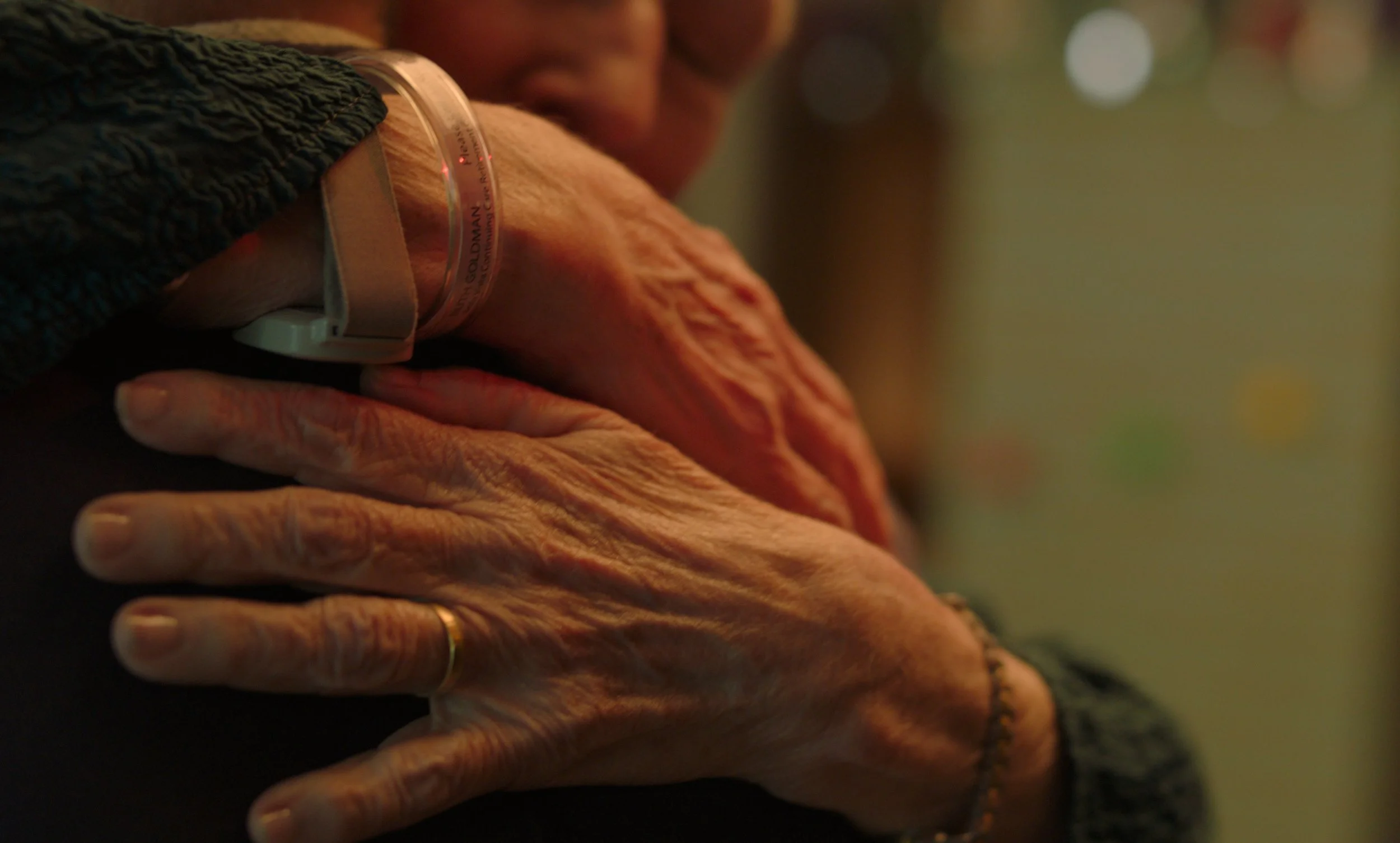
And that is the gut-wrenching opening act to Sarah Friedland’s (Winner of Venice Film Festival Lion of the Future Award 2024) contemplative directorial debut, Familiar Touch, a delicately woven 91-minute meditation on memory, ageing, and identity. Friedland delivers an exquisitely intimate study of dementia that deftly steers clear of overused Hollywood cliches to allow for a dignified portrayal of such an unravelling disease. Here, Ruth Goldman (Kathleen Chalfant) steps into a different type of coming-of-age film as she adjusts to her new life in an aged care facility. The film explores her subjective experience as she grapples with her shifting perception of reality in a place so foreign.
Friedland takes a minimalistic approach to Ruth’s story. There’s no sudden, dramatic decline in her cognition. Instead, we watch as Ruth’s memory ebbs and flows. We see her navigating her confusing new relationships with her primary caregivers, or ‘friends’ as she refers to them. Make no mistake, this is not a plot-heavy piece, and the storyline itself drags a little in the second act due to a lack of strong narration. Instead, it soaks itself in atmosphere and the repetition of Ruth's daily routine, which may test the patience of those who have no personal connection to the film’s theme.
Familiar Touch artfully avoids conventional flashback scenes, instead using tactile and auditory cues as a means of expressing connection and memory. In a moment of disorientation, Ruth confuses the aged care kitchens with the one she once worked in when she was younger. Here she is seen purposefully chopping fruit, commanding space, and ever so carefully plating food to perfection. What could have been a cheap joke about forgetfulness is instead transformed into a way of emphasising Ruth’s continuing identity.
As someone whose own grandmother passed away with dementia only a few months ago, Familiar Touch was not an easy watch by any means. However, unlike many dementia films that centre on the caregiver’s pain, it directly challenges the idea that cognitive loss erases one's identity, which is something I can personally attest to. Even when my grandmother no longer remembered me or where she was, I still recognised her in the smallest of ways.
Chalfant captures this beautifully, respectfully portraying Ruth with such pure vulnerability and innocence, yet never in a way that infantilises her. Her most powerful scene comes when Ruth gleefully recalls her son’s name only to immediately break down, as she loudly proclaims that she’s only going to forget again. In a film that heavily relies on moments of silence and physical movement to communicate, her cry hits that much harder. It should come as no surprise that Chalfant's portrayal won her the Best Actress Award at the 81st Venice International Film Festival.
So if you’re into crying relentlessly, witty octogenarians, the intimacy of touch, and gentle humour, then Familiar Touch is the film for you.
3.5 out of 5 fruit cups
Familiar Touch is screening as part of the 2025 Melbourne International Film Festival. For tickets and more info, click here.