
MIFF 2025 Film Review - Happyend
Images courtesy of Common State.
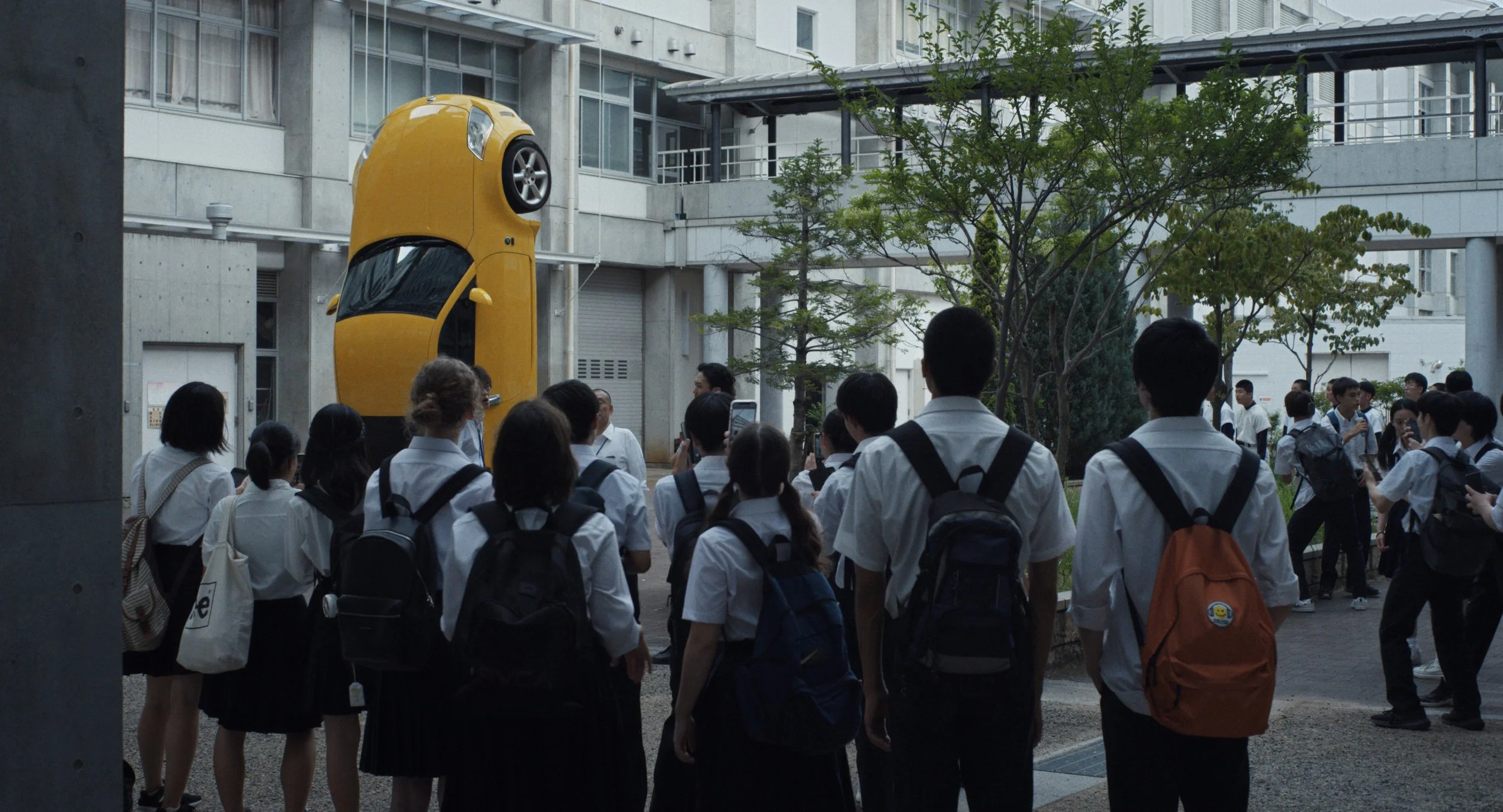
Neo Sora’s compelling narrative debut Happyend, is a controlled, beautiful tale set in the near dystopian future, where Japanese youth must grapple with their now increasingly authoritarian high school. The oppression of surveillance, conflict of youth rebellion and most importantly, the conviction we have in ourselves to do what feels right, are all carefully explored in this coming-of-age drama.
With a sonically exhilarating opening scene, we are immediately transported into the youth’s playground of underground techno, ushered in by one of Japanese DJ’s Greats: Yousuke Yukimatsu. The two male leads, Yuta (Hayato Kurihara) and Kou (Yukito Hidaka), are only awarded a fleeting moment of blissful beats, as a few minutes later, the police come to strip it all away. This abrupt intrusion in a space of expression and liberty, marks a start to the meticulous enforcement of conformity that’s to come.
Happyend naturally weaves in notes on cultural dislocation, xenophobia, misuse of power, and class consciousness, over the backdrop of rising political tension. And in the midst of all this, it still gives careful consideration and time to portray the mundane, the laughter, the bickering, the pause. We are shown that there is always room for friendship, gentleness, and growth (also techno music).
For a premise and genre like this, Happyend could easily install Battle Royale levels of punishment and sensationalism, and I was admittedly surprised – though never underwhelmed – that the laser-sharp surveillance system didn’t result in any blood and gore. In this way, I appreciate the film’s restraint; allowing audiences to focus in on the quiet albeit suffocating ideals of a subservient, purist Japanese society. Sora doesn’t need to assault your eyes and ears with heavy-handed drama or cheap thrills, because he trusts his audience to understand.
The brilliant, measured performances from protagonists Yuta and Kou , only solidify how restrained Happyend’s storytelling ability is, making its commentary on control of freedom, and therefore control of our personhood, all the more tangible, and all the more real that this could be our future.
The plot becomes somewhat predictable nearing the end, and some of the supporting cast could certainly have been further developed. And whilst I don’t think Happyend brings anything new to the conversation on state governance, justice, youth resistance, and navigating the fickleness of friendships, Sora’s subtlety in its approach is where its power lies.
A thematically strong but never over-bearing piece, Happyend is a visually and sonically rich experience that proves its place in the accomplished subtlety of Japanese cinema.
Follow Rosey on Letterboxd.
Happyend screened as part of the 2025 Melbourne International Film Festival. For more info, click here.