OpenAI, Peter Thiel and the Death of Indie: How A24 Sold Out
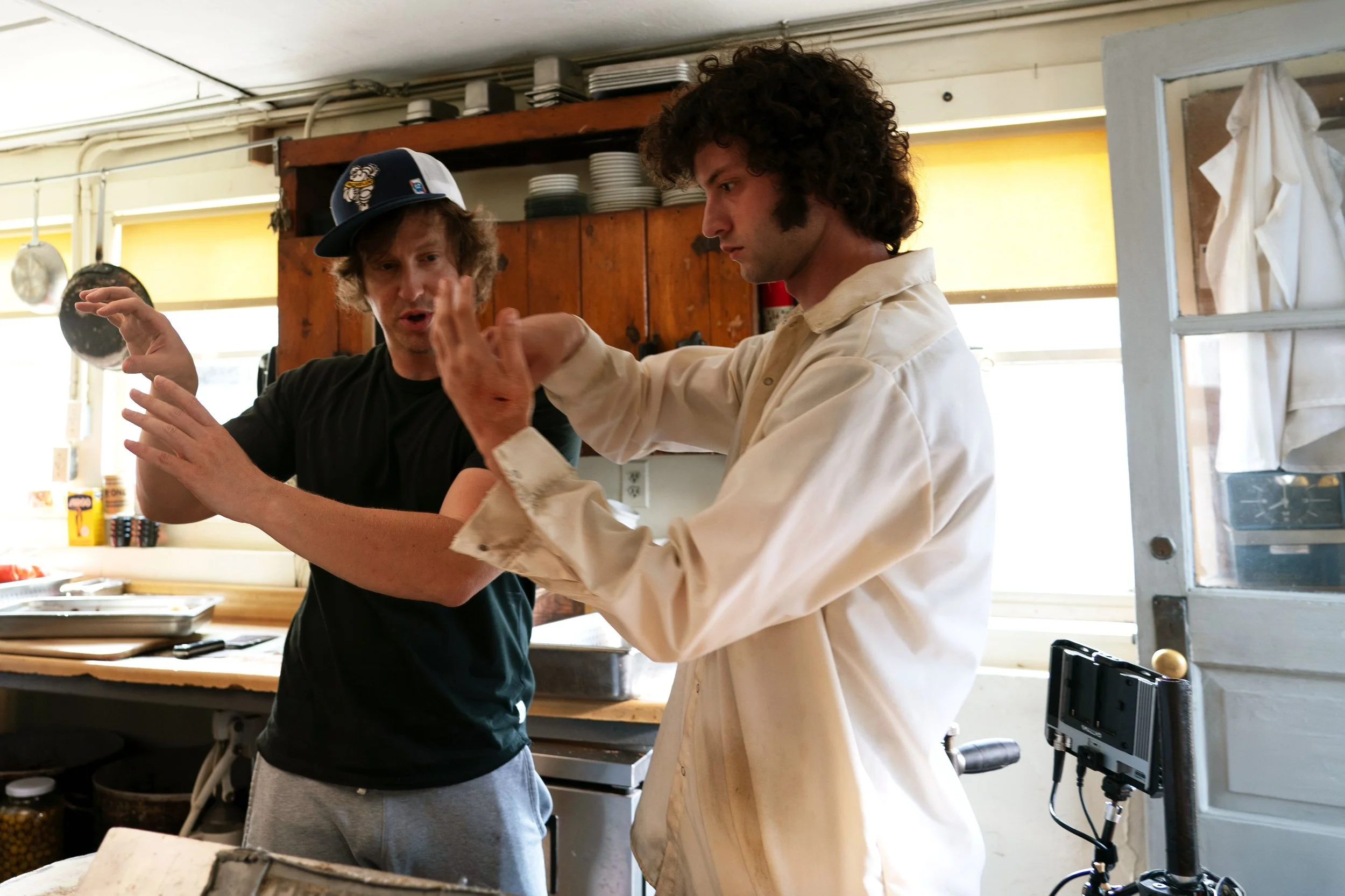
Matt Johnson (left) and Dominic Sessa (right) on the set of Tony (2026). (A24)
Just over a month ago, the New York-based film production company A24 announced a controversial new partnership with Google’s artificial intelligence lab, Deepmind. Netting a $75 million investment in exchange for giving Deepmind access to its deeply secretive workflow, A24 was blindsided by a swift and sudden campaign of online hate. Former fans of the studio called the deal a threat to ‘real cinema’, the beginning of the company’s descent into ‘slop’ and one particularly blunt viral tweet read simply ‘fuck a24 for partnering with ai’. To an outside observer, this tidal wave of rage directed at only one major production company for adopting AI tools may seem bizarre. After all, Netflix just partnered with Ben Affleck’s generative AI startup, and Lionsgate is set to release an AI-animated feature film. What makes this deal different is that A24 isn’t your typical Hollywood studio – or at least, it would like you to think that.
Best known for stylish independent hits like Pearl and Lady Bird, A24 has pivoted to more expensive commercial fare in the last few years: A-list romcoms, sports dramas and terminally online Gen Z pandering, such as Charli XCX’s mockumentary The Moment and a live-action adaptation of the Internet phenomenon Backrooms. Its next scheduled release is Tony: a universally acclaimed biopic about celebrity chef Anthony Bourdain, which could easily be an awards contender. Instead, the company has opted to bury the low-budget indie with an unceremonious August 2026 release date, months before the traditional awards season window in Autumn. Why is a former champion of the US arthouse scene marginalising its smaller productions and selling its creative juices to Silicon Valley? The answer, believe it or not, involves bedazzled Furbies, a distant relative of Donald Trump and a secret society run by tech billionaire Peter Thiel.
To understand the backlash to this deal, it’s necessary to dive all the way back into A24’s humble origins. Founded in 2012 by seasoned producers David Fenkel, Daniel Katz and John Hodges, A24 started off as a grassroots distributor for ‘movies with a distinctive point of view’. Its first two marketing gigs went under the radar, before striking gold with Harmony Korine’s raunchy satire Spring Breakers. Relying on a then-unusual Facebook campaign, A24’s social media specialist Zoe Beyer jokingly recreated The Last Supper with James Franco’s pimp character as Jesus and Gucci Mane as Judas. The meme garnered 600,000 likes in a matter of days, contributing to Spring Breakers’ $30 million box office and acclaim as the ‘first social-media promoted film’ by Entertainment Research and Marketing founder Gary Faber.
Spurred by this success, A24 undertook increasingly ambitious campaigns to promote its acquisitions: posting fake thirst trap links on Craigslist to advertise Jonathan Glazer’s Under the Skin, setting up a Tinder profile for the murderous robot of Ex Machina, and hosting Satanic Temple-endorsed screenings of The Witch to drum up enough controversy for a festival deal. These stunts were juvenile, attention-seeking, and yielded viral results that shifted the conversation around indie film distribution: not a fruitless enterprise, but a showcase for entrepreneurial talent.
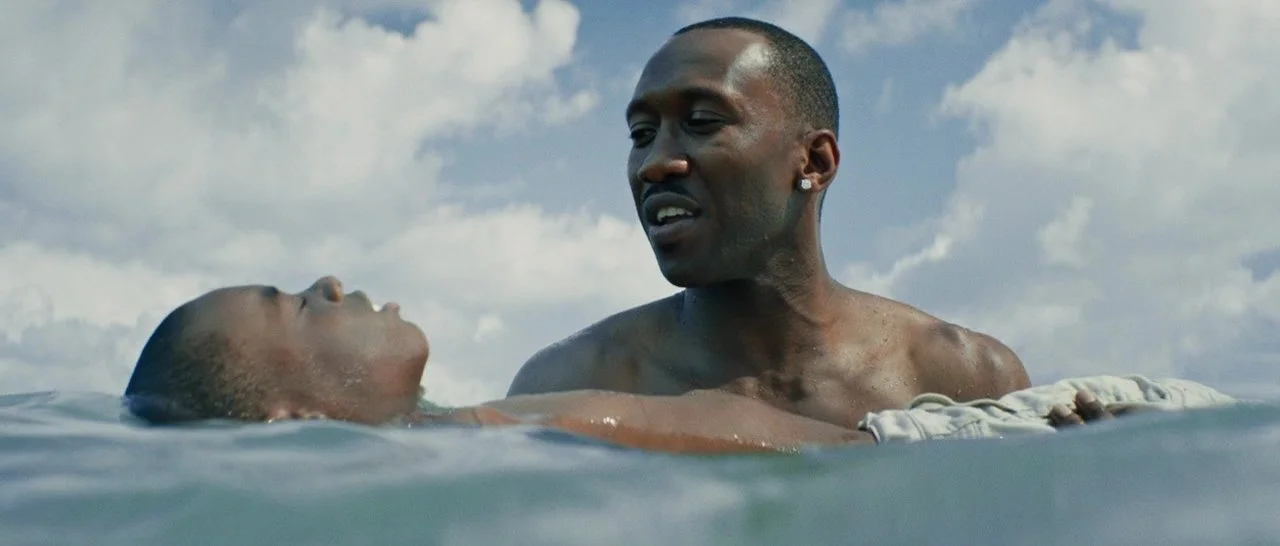
Moonlight won Best Picture at the 2017 Oscars with a $1.5 million dollar budget. (A24)
In 2015, A24 branched out from distributing films into financing them. The company’s first foray into production, Barry Jenkins’ Moonlight, proved successful beyond its wildest dreams, taking home Best Picture, Supporting Actor and Adapted Screenplay at the 2017 Oscars despite a tiny $1.5 million budget and ‘niche’ subject matter. By finding an untapped market for queer African-American stories, the film demonstrated that A24’s unique boots-on-the-ground marketing worked; Moonlight’s popularity grew from word-of-mouth festival buzz and targeted theatrical previews in Atlanta and Miami, rather than traditional press and TV advertising.
Having swept Hollywood, the studio’s commercial ambitions increased considerably. It opened up an online merchandise store that featured Hereditary-themed sweatpants andtie-in Furby pendants for the Adam Sandler-starring thriller Uncut Gems, as well as stickers, caps and T-shirts emblazoned with the company’s logo. Collaborating with artisan designers on exclusive merch drops, A24’s lifestyle brand has since become a core pillar of the company’s earnings, accounting for 15% of their 2025 financial report. Is this kind of consumerism antithetical to the spirit of arthouse filmmaking? And on a less morally righteous level, isn’t it just plain tacky to peddle irony-pilled merch for brutal personal art like Midsommar? Almost certainly.
“This expansion strategy is an obvious betrayal of A24’s ‘distinctive’ founding ethos, steering away from its risky low-budget origins toward conventional and glossy Hollywood fare.”
Even Jenkins expressed a degree of uncertainty over ‘opening the art up to commercial opportunities’ and acknowledged that it seemed a little ‘uncouth’. His counter was that this side hustle was necessary to keep the company ‘robust’, so it could continue financing diverse, experimental cinema. But this argument falls flat in the face of the studio’s cutbacks on low-budget film funding, as part of an aggressive new strategy. In 2024, the company ‘shrank’ the funding for its Indie division, which had previously financed ultra low-budget projects like Aftersun and First Cow. A year later, A24 shut down its Documentary division entirely, laying off five employees.
Indeed, a top Hollywood agent confirmed that the company’s head of film Noah Sacco began specifically requesting ‘action and intellectual property’ pitches over original ‘auteur driven’ projects all the way back in 2023. The most obvious evidence of this new IP-based direction is the studio’s upcoming adaptation of the video game Elden Ring, its most expensive film to date with a budget well over $100 million. This expansion strategy is an obvious betrayal of A24’s ‘distinctive’ founding ethos, steering away from its risky low-budget origins toward conventional and glossy Hollywood fare. But as ruthless as Sacco may be, even his actions pale in comparison to those of shareholders higher up the command chain.
During the pandemic, A24 almost became the victim of a buyout by Apple after lockdown took a devastating chunk out of its theatrical business. The company was narrowly saved in 2022 by both a $225 million private equity investment and the action-comedy Everything Everywhere All At Once, its first production to cross $100 million at the box office (it’s no wonder, then, that Sacco has been chasing another action hit since). After salvaging its losses, Chief Financial Officer J.B. Lockhart was determined to take the company to greater heights. He scored a staggering $3.5 billion valuation in its next investment round in 2024, courtesy of Josh Kushner’s equity fund Thrive Capital. If the name sounds familiar, it’s because Josh’s elder brother is Jared Kushner, Donald Trump’s son-in-law.
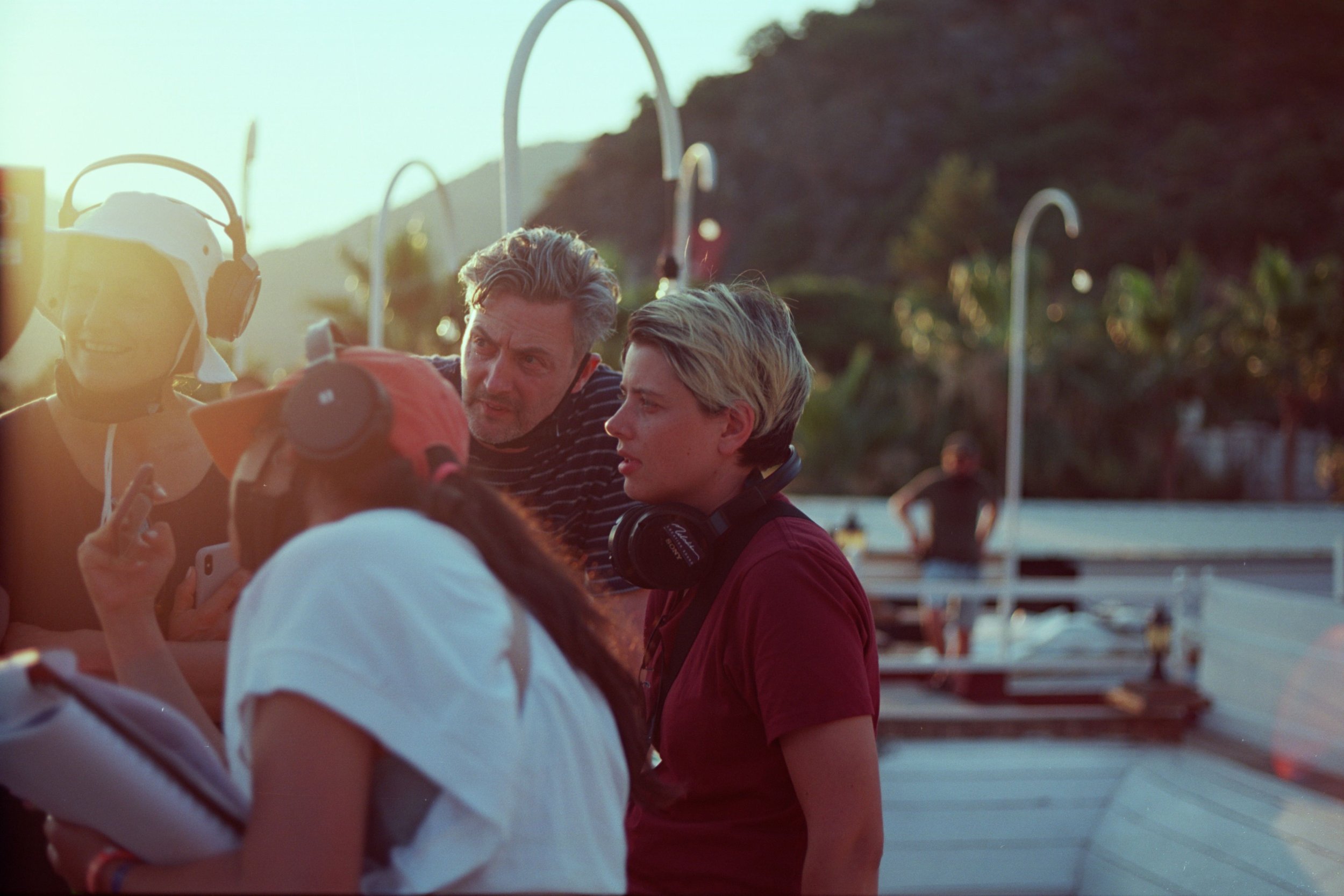
Charlotte Wells (center) on the set of Aftersun (2022). (A24)
Considering Kushner’s stake in the studio, it’s no coincidence that A24 passed on distributing Luca Guadagnino’s new movie Artificial in June. On paper, the film was a perfect fit for the A24 brand; a topical hit piece on Big Tech CEO Sam Altman, played by Social Network alum Andrew Garfield. The supporting cast includes indie darling Jason Schwartzman, who appeared in Guadagnino’s previous collaboration with A24, Queer. So why no distribution deal? Well, Altman happens to be the founder of OpenAI, which received a $1 billion investment from Thrive Capital in February. In the past, it might have been easy to shrug off A24’s partnership with a conservative venture capitalist as strictly business. But this is an undeniable case of Kushner’s financial interests interfering with the studio’s artistic expression, to the point of censorship.
A24’s compromising ties to Silicon Valley don’t stop there. Scott Belsky, the head of its new AI-focused Labs division, was named in a recent leak as a member of billionaire Peter Thiel’s secret society, Dialog. So was Tom Lue, the General Counsel of Google Deepmind. Thiel famously co-founded AI surveillance company Palantir, which is currently facilitating the Israeli military’s targeting of Palestinian civilians, as well as Homeland Security’s ongoing ‘super-database’ of Americans’ private medical records.
“Deepmind’s potential involvement in the filmmaking process is ‘open to negotiation’”
Without diving into speculation, it’s fair to say that Belsky and Lue’s personal connection to Thiel creates concerning implications about how ethically Deepmind’s AI tools will be used by A24 Labs. The party line is that Deepmind will only have access to A24’s production process and workflow, not its library of films. However, Deepmind’s potential involvement in the filmmaking process is ‘open to negotiation’, meaning future A24 releases could be required to use the company’s litany of Generative AI systems. The studio didn’t even deny these concerns when asked, with spokesperson Sophie Shin ambiguously stating, “I don’t even know if ultimately we’d create tech on that front”.
As depressing as this deal is, it clearly isn’t as unprecedented of a betrayal as the online backlash would indicate. A24 has been shilling for artificial intelligence companies ever since it partnered with Kushner, not out of self-preservation but greed. A US studio worth $3.5 billion in venture capital could never sustain its reputation as a bastion of independent filmmaking, because the money inevitably comes with strings. In the last few years, A24 has evidently accepted this sacrifice in order to become the very thing it swore to destroy: a blockbuster-hungry, conservative Wall Street monolith, killing the market for independent cinema.
Follow Jodie on Instagram and Letterboxd.