
Film Review - Avatar: Fire & Ash
Images courtesy of 20th Century Studios.
It's been three years since the Avatar franchise took us on a dive with The Way of Water, and even without the foresight of box office returns, James Cameron’s latest entry, Fire and Ash, is an unmistakable blockbuster. From sweeping aerial set pieces to intimate motion‑capture performances that sell the Na’vi as living, breathing characters, this is no mere tech showcase, with Cameron offering a potent blend of visual splendour and heart. Where some may argue the franchise’s novelty has diminished, this third entry nevertheless finds fresh permutations of Cameron’s signature set pieces, leaning into total war‑scale chaos without completely losing the tactile detail that made the earlier films immersive. The result is a movie that feels like a landmark - a sensory experience that rewards theatrical viewing and repeatedly reminds us why Pandora still matters on the big screen.
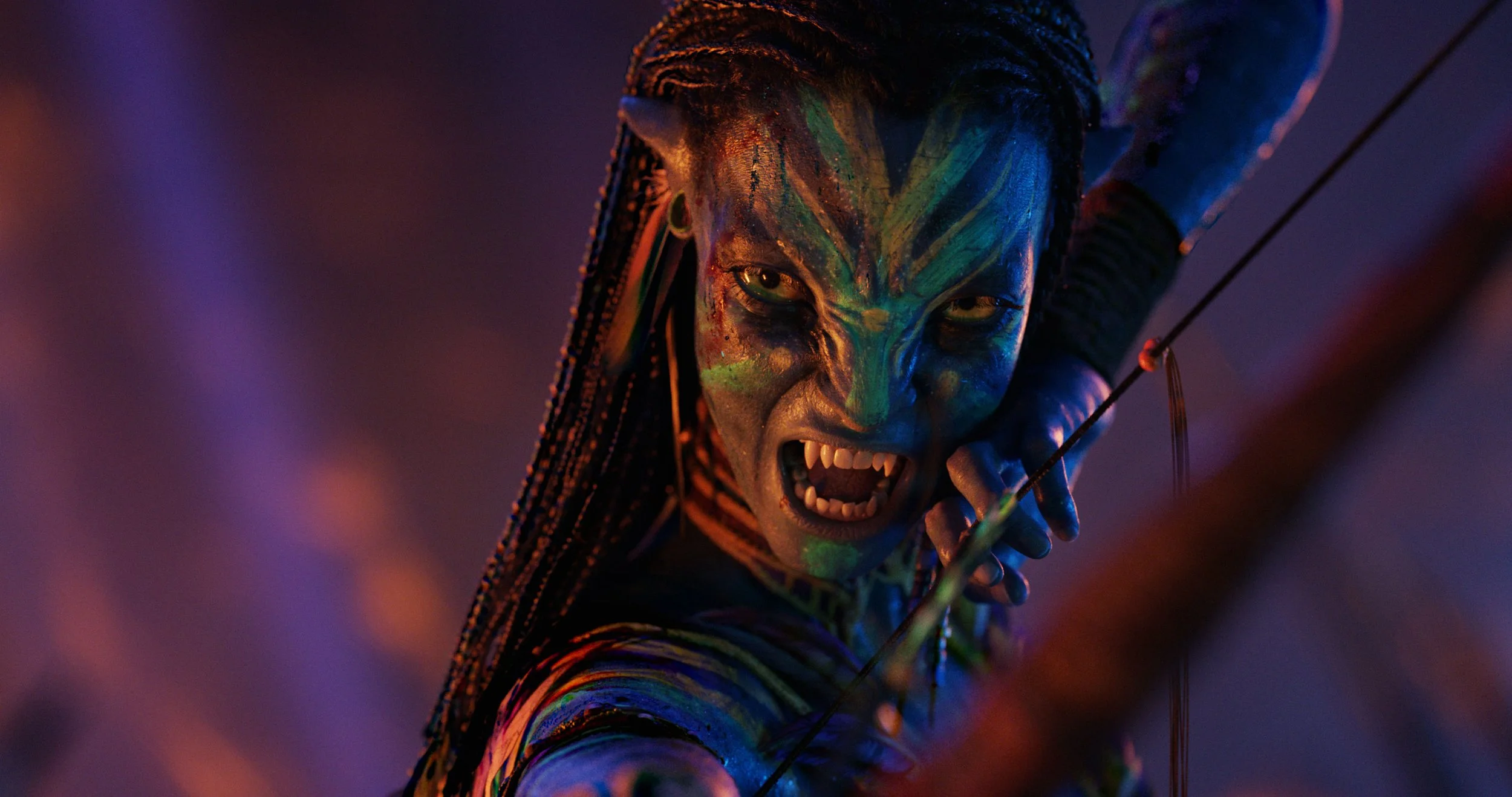
Narratively, the film tightens its emotional throughline around the Sully family and the costs of defending their world, and it often lands with a tender sense of earnestness. The screenplay balances large‑scale conflict with quieter character beats, giving returning players like teenagers Kiri, Lo'ak, and Spider room to grow beyond their grating introductions and expand the franchise’s moral stakes, giving the third entry a palpable sense of momentum and purpose. There are moments where the film indulges in the familiar franchise rhythms of human vs Na'vi, but those beats are offset by sequences that feel riskier and more urgent, notably the introduction of secondary antagonist Varang, the aggressive and intimidating leader of the Mangkwan fire clan. Her screen presence is fierce, brought to life by a truly primal performance from Oona Chaplin, and her evolving dynamic with Stephen Lang's Quaritch offers a welcome injection of offbeat humour, a standout moment between the two culminating in a bizarro hazing ritual.
I've played coy about the nitty gritty details of the Fire and Ash, but it is truly the kind of experience that just washes over you, a thing of beauty that has to be seen to be believed. The sheer propulsion of this outing feels like a worthy upgrade in many ways over its predecessors (even if I did find myself wanting more scenes of environmental worldbuilding), its breakneck pace and tonal clarity allowing it to grow into a bolder, more focused chapter in Cameron’s saga. In IMAX 3D the world of Pandora truly popped off the screen, with the film's switches between standard and high frame rate being far less jarring than last time around, and as a sucker for tech stuff like that, I felt seen by Eywa herself. That said, its runtime and occasional narrative repetition could blunt the emotional payoff for some viewers, and if future entries don’t shift gears a little more there's a possibility it'll end up wasted potential. But, for now at least, there's much to ftxozä (celebrate).
Fire and Ash is a compelling demonstration of what blockbuster filmmaking can still achieve when craft, ambition, and heart align - a film that will satiate fans hungry for spectacle while offering enough character work to give the stakes meaning. For anyone who loved the world-building of the earlier films and wanted a sequel that felt both grand and humane, darker yet all the more dazzling, Ash settles as a more than worthy, downright exhilarating next step for the series.
Follow Eli on Letterboxd, Twitter/X and Instagram.
Avatar: Fire & Ash is screening in cinemas now. For tickets and more info, click here.