
Film Review - Black Phone 2
Images courtesy of Universal Pictures.
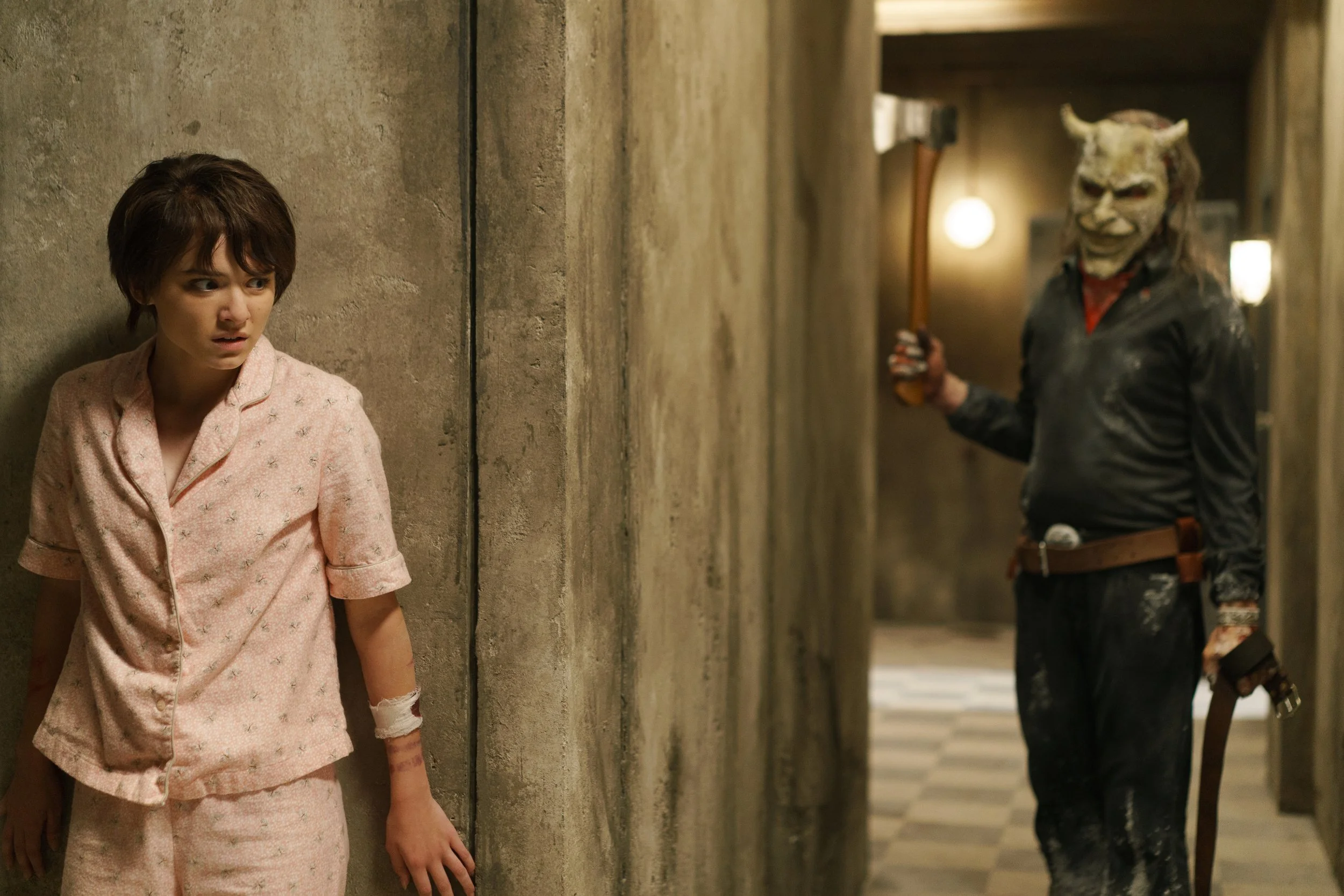
Arriving a mere two years after the first film scared up a minor success at the box office, Scott Derrickson’s Black Phone 2 leans into its lineage and then sharpens its teeth: offering up a colder, meaner follow-up that amplifies both the physical brutality and the supernatural dread. The sequel finds ways to expand the mythology without collapsing under the weight of franchise-building, all while giving Ethan Hawke more room to revel in his role as the hypnotically repellent central villain, haunting from beyond the grave as much in violence as in vocal inflection.
The film’s bravest choice is how tactile it remains. Where many modern horrors go digital and slick, Black Phone 2 has Derrickson yet again foregrounding analogue technology - rotary rhythms, crackling phone lines, the eerie and claustrophobic haze of 8mm film - all as a conduit for fear. The analogue grain makes supernatural intrusions feel personal and invasive, and Derrickson stages these moments with a craftsman’s precision: softly focused human shapes, the hush of tape, and the crackle of film burn all become instruments of dread. This textural focus keeps the film invested in atmosphere as much as shock.
Ethan Hawke’s Grabber is the movie’s dark north, his performance escalating from the base creepiness present in the original film into something almost operatic. He has more room to play here, and he uses it - a mixture of vaudeville showmanship and cold menace that recalls classic dream-haunting villain Freddy Krueger. The film even leans into a Dream Warriors–adjacent plotline that sees siblings Finney and Gwen joined by classmate Ernesto as they're snowed in at a Jesus camp while looking into their mother's history, as well as that of The Grabber.
The sequel’s visuals and story are a tight duet. The palette skews icy blues, washed-out whites, and warm hues of the cabins, turning violence into something that feels arcane, like a ritual that taints the ground it takes place on. The score complements that chill with needle-sharp motifs that burrow into the viewer’s ear, echoing Disasterpiece’s chiptune work for It Follows. Production design and sound work together to make the film feel like a carefully built machine for discomfort, using washed-out bitcrushing of audio to amp up the snowy setting, and it succeeds more often than not.
But, Black Phone 2 isn’t flawless. The screenplay occasionally slips into groan-inducing dialogue and mandated exposition that dulls momentum. Some character beats are shorthanded where a little texture would go a long way, and the balancing act between expanding lore and preserving mystery stumbles in a few scenes. Those moments are more frustrating than fatal, interrupting otherwise effective tonal work rather than overthrowing it. Perhaps what does seem baffling, though, is that the film doesn't just shift completely into the perspective of Gwen, as her connection to their mother seems to be a much bigger driving force than Finn’s internalised angst.
As a sequel, Black Phone 2 is an upgrade over its predecessor in the ways that matter most to seasoned horror fans: it heightens cruelty without forgetting to offset it with emotional satisfaction, brings out tactile eeriness in a big way, and solidifies Hawke’s Grabber as one of the more iconic horror antagonists of the modern age. It’s not seamless, but it’s bold and often electrifying, a film that earns its chills and, at times, taps into the inventive, wild energy of the best 1980s genre work, while also staking out its own frosty territory.
Follow Eli on Letterboxd, Twitter/X and Instagram.
Black Phone 2 is screening in cinemas now. For tickets and more info, click here.