
Film Review - The Smashing Machine
Images courtesy of VVS Films.
Benny Safdie’s The Smashing Machine makes a suitably hard-hitting first impression. An unrecognisable Dwayne Johnson sprints into a ring as wrestler Mark Kerr, quickly decimating his opponent with blisteringly real brutality. But this isn’t just a match - it’s a gauntlet. Kerr fights opponent after opponent after opponent. The question isn’t whether Mark is going to lose - it’s when are they going to stop throwing poor guys at him? The battle rages for what feels like ten minutes, the screen awash in a VHS-esque haze, so far removed from what you’d expect in a film starring “The Rock.” It’s this unique opening that gave me hope The Smashing Machine might defy sports film convention, and give Dwayne Johnson a film actually worth remembering once the credits rolled.
Unfortunately, it doesn’t.
The Smashing Machine is your stock standard sports biopic, with the visual flair of Good Time. A career-defining performance from Dwayne Johnson is wasted on a story not unlike others in its genre, wasting its intensely fascinating subject on a film which has so little bite.
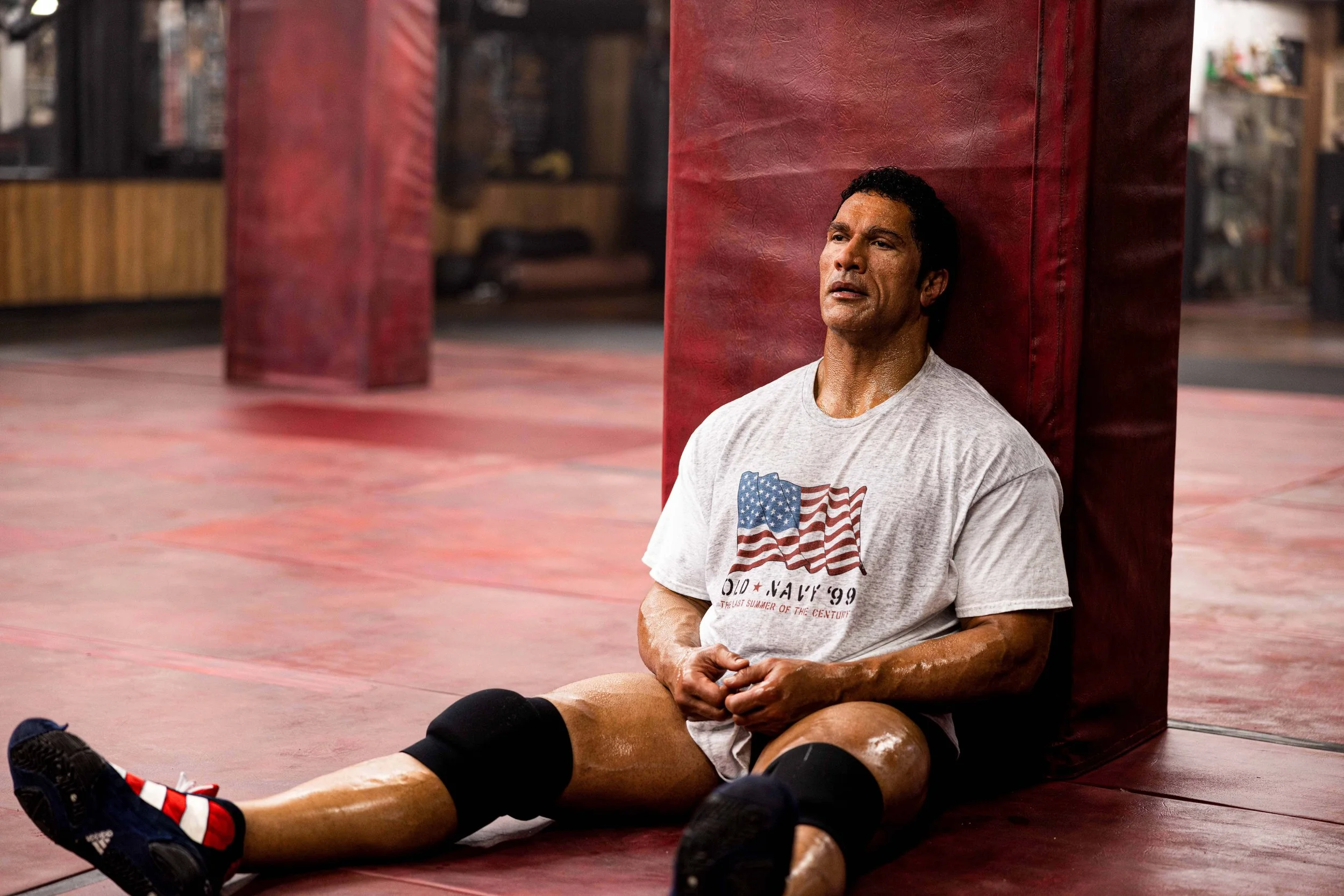
It’s a shame, because the first act builds on the promise of the beginning in ways that genuinely excited me. It contrasts the intensity of that opening with something quieter: an introduction to Kerr’s relationship with drugs, and his strained relationship with partner Dawn (Emily Blunt). The first time we see Kerr use is deeply affecting, and Safdie cleverly employs a plotpoint as mundane as Dawn failing to make Mark's ideal protein shake to plant an undercurrent of tension that lasts for the entire film. Performance wise, Johnson is up to the task. He plays Kerr as the gentle giant he is, gracefully shifting between unbridled fury in the ring and a calm, jolly presence outside of it. It’s a side of Johnson we rarely, if ever, get to see, and one I hope he continues to explore. Blunt also delivers, elevating the deluge of argument scenes with real emotional depth.
However, these strong performances can’t save a script that keeps Kerr’s problems at arm’s length. We're never truly invited to explore his emotional depths or linger in his lowest moments beyond what's necessary to move the plot along. A clear example of this is the drug-use subplot. Though the film frames it as a major issue, the process of watching Mark get clean is surprisingly spare. He’s in rehab for approximately two minutes of the runtime, this significant stretch of time being simply glossed over for what feels like familiar territory - fights, training, and arguments with Dawn.
It would be fine if these more action-inclined elements were simply more interesting, but The Smashing Machine’s narrative simplicity unfortunately extends to these moments too. Each fight/training montage isn’t informed by a question or goal, simply by improving and winning - it's just a mesh of tropes you can find in one of the nine Rocky films. And Mark's relationship with Dawn, while definitely the film’s most nuanced plotpoint, feels ultimately unsatisfying by the end because of a title card which destroys any sense of narrative closure built by their final encounter.
And while the film is beautifully shot, its aesthetics can’t make up for everything else it lacks. The Smashing Machine is a star turn for Dwayne Johnson, and sadly, very little else.
Follow James on Letterboxd.
The Smashing Machine is screening in cinemas now. For tickets and more info, click here.