
MIFF 2025 Film Review - Urchin
Images courtesy of Common State.
Life is a series of cycles. Waking up at the same time consistently: a cycle. Making it to work at nine each day: a cycle. These particular cycles give our lives structure in the most positive sense of the word, but the cycle Urchin is concerned with is substance abuse, and its brisk 99-minute runtime does a terrific job at showing how quickly this cycle can bring a person teetering on the edge to ruin.
The film sees a charismatic young drifter named Mike (played by Frank Dillane in what might be the most raw performance I’ve seen all year) attempting to escape his meagre, drug-addled life after he’s arrested for assault. And while the meat of the film is in seeing Mike’s path after this assault, I first want to cover the film’s early period as I felt it essential to my appreciation of its latter sections. Urchin opens with a series of scenes showing Mike’s experiences on London’s streets, and it has a documentary-esque feel. Director Harris Dickinson shoots at a distance when showing Mike getting into fights, robbing people, and asking strangers for money - the realism made me wonder if Dickinson shot these scenes guerrilla style, making pedestrians watch two grown men throw haymakers at each other in broad daylight (Dickinson also plays Mike’s druggie opponent in this brawl).
While the hyper-realism caught me off guard, it had the added effect of locking me into an otherwise simple story about a man’s inability to overcome his vices. Dillane manages to shift seamlessly between Mike’s kind and lurid states, convincingly demonstrating the almost Jekyll and Hyde-like personality shifts a person undertakes under drugs’ influence. All of this to say that Dickinson made me feel sympathetic for Mike, but also kind of held him accountable. I was able to feel pity and sadness for him at his lowest but was still also able to recognise the role he played in getting there. Urchin isn’t concerned with a film-like “happy” conclusion to its character’s problems; it lets you marinate in the idea that things might not actually get better - and that was refreshing.
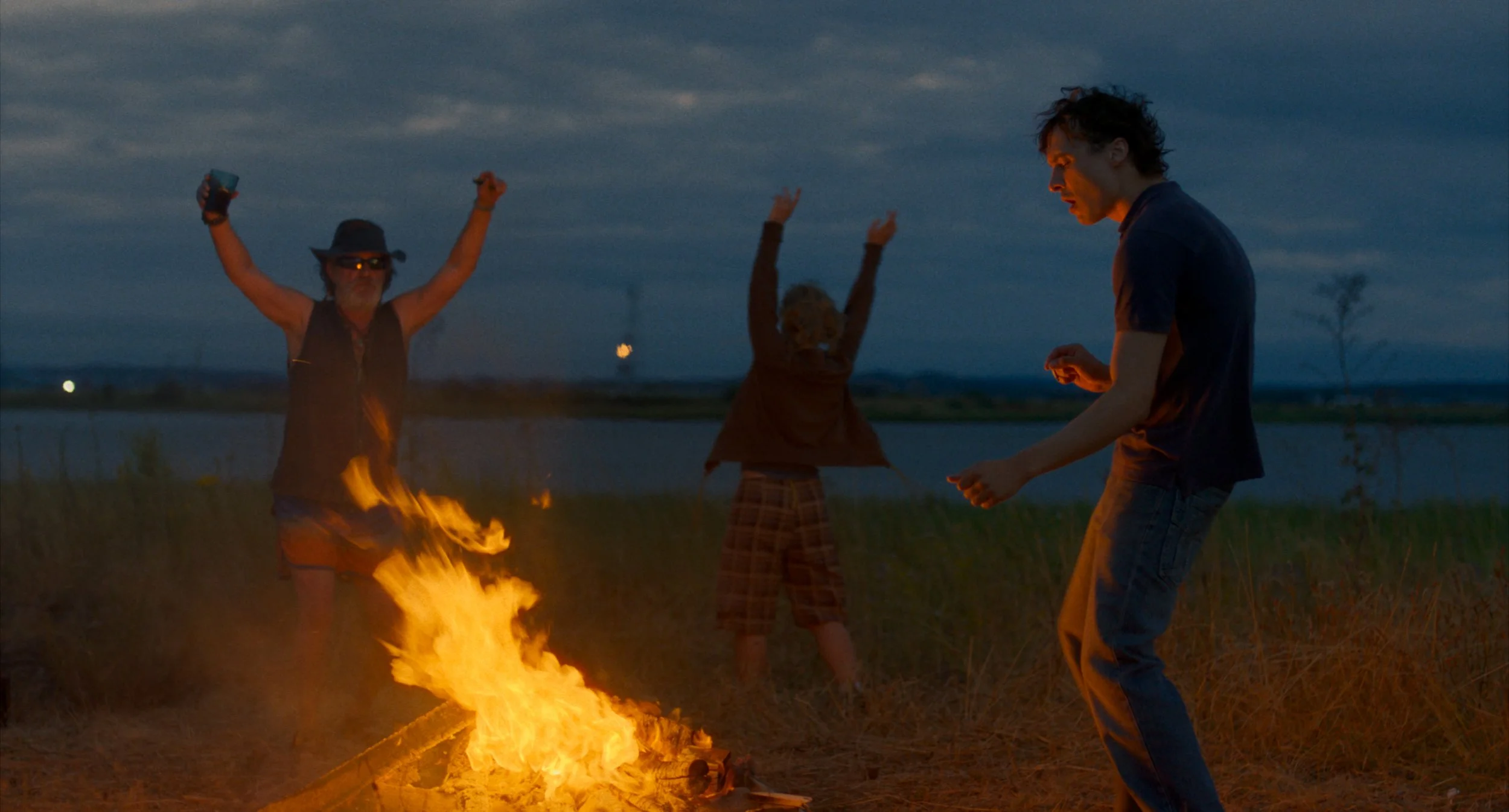
This raw approach certainly made Urchin’s lowest points harder to watch, but it also elevated the more tender parts of Mike’s story. When you’ve been made to watch an innocent man be beaten and have his watch stolen, a three-minute unbroken take of Mike and his workmates belting out “Whole Again” by Atomic Kitten is certainly comforting. All this is bolstered by impressive camera work and lighting, shots balancing between the beautifully composed and coloured to those aforementioned doco-esque ones, which look like a scenario you’d want to avoid while on your work commute.
And while Urchin has its quirks (multiple dream-like sequences with Mike standing amidst a cave notwithstanding), its balancing act of these highs and lows makes it one of 2025’s must-watch films, and also marks co-writer/director Harris Dickinson a creator to look out for in the future.
Follow James on Letterboxd.
Urchin screened as part of the 2025 Melbourne International Film Festival. For more info, click here.