
Film Review - Weapons
Images courtesy of Warner Bros.
Every once in a while, a film manages to thread the needle between nerve-shredding horror and sharp, genuinely funny comedy without ever feeling forced or careless. Zach Cregger’s Weapons is resoundingly one of those rare beasts. Building on the breakout success of Barbarian, Cregger delivers a project that feels even more confident, ambitious, and tonally agile; a horror epic with the sprawling, character-driven heart of Paul Thomas Anderson’s Magnolia, but absolutely no interest in solemn, “elevated” horror handholding in regards to theme.
Instead, Weapons revels in the absurd and uncomfortable, finding laughter in the wrongness of tragedy, and horror in the mundane failings of small-town America. The humour in the film - not unlike in Cregger’s work on Whitest Kids U Know - emerges from keenly observed, often ludicrous predicaments in which the characters find themselves, while the horror is as much about community hysteria and institutional incompetence as it is about any kind of supernatural evil. With a shifting ensemble perspective, the film keeps viewers on their toes: we are never settled, always guessing, and frequently surprised by Cregger’s relentless narrative momentum.
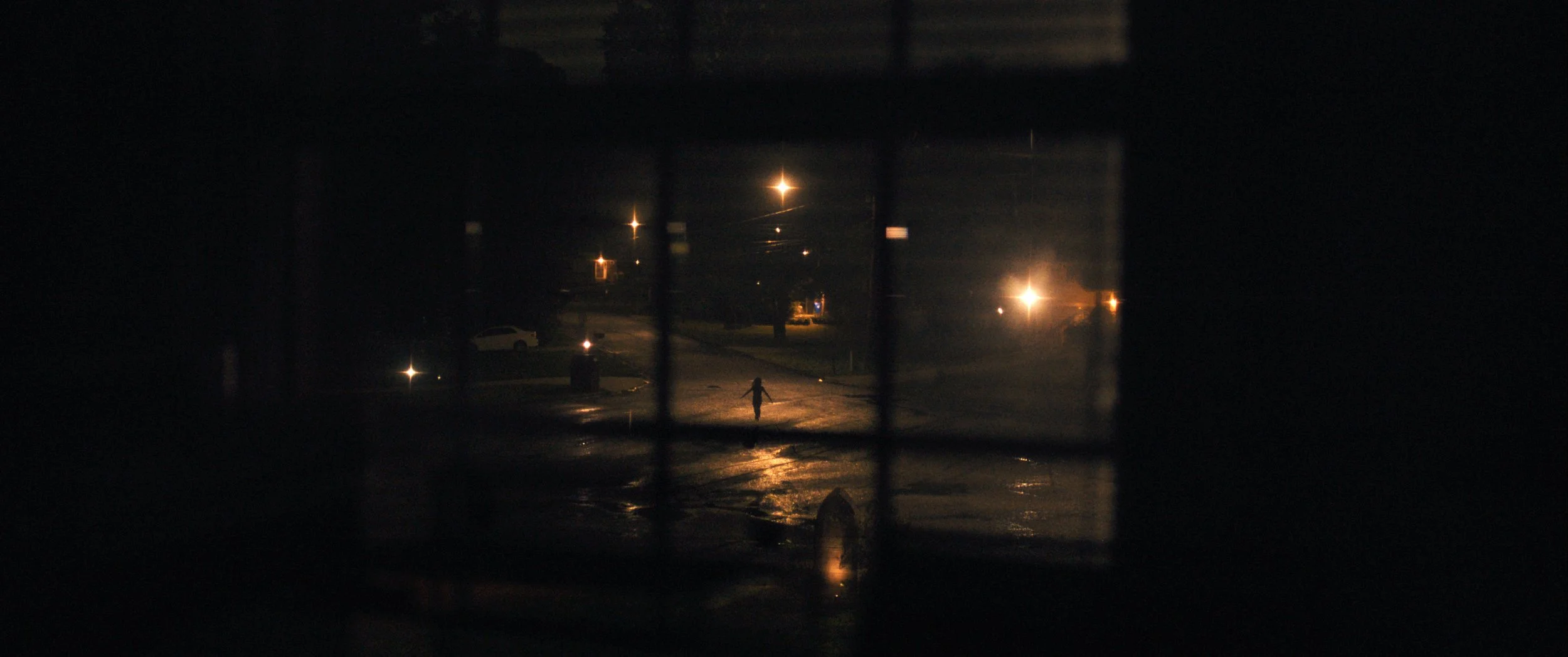
Weapons kicks off with a cold open that'll immediately be familiar to anyone who's seen the marketing: a montage narrated by a young girl, detailing the inexplicable 2:17am exodus of all of the children from Justine Gandy (Julia Gardner)’s class. There is no outward sign of coercion. They run, arms out, into pre-dawn darkness, leaving their parents - and the fabric of Maybrook - shattered beyond repair.
Miss Gandy, traumatised teacher and local pariah, is immediately suspected by both parents and police, especially after it’s revealed that one boy in her class - Alex Lilly (Cary Christopher) - remained behind. Justine’s efforts to reach Alex, coupled with her lonely, faltering existence (her car vandalised with “witch” in red paint), set a tone of communal breakdown: rage turning to paranoia, then scapegoating. Angered parent Archer Graff (Josh Brolin) sets out on his own investigation, mapping out the routes taken by the missing children, while simultaneously haunted - like Justine - by visions of a gaunt, clownishly made-up crone. Meanwhile, Paul (Alden Ehrenreich), the cop, is mired in alcoholism and infidelity, and finds himself accidentally drawing James (Austin Abrams) - the local addict - into the main trajectory of the horror through a violent and darkly comic series of mishaps involving needles.
Abrams’ James is one of the standout players here - the erratic, unwashed, and unpredictable comic engine of the middle acts. His motivations are as simple as they are desperate: find enough quick cash for his next fix. When James stumbles upon the town’s missing children, his motive for ringing in their whereabouts is not altruism, but a $50,000 reward for information regarding their whereabouts. Abrams plays it with a jump-cut nervousness: his performance is all wide-eyed confusion, flustered improvisation, and the result is unmistakably authentic to anyone who’s crossed paths with someone who has unfortunately found themselves in the throes of addiction.
If Barbarian was Cregger’s directorial calling card - a gonzo, structurally playful horror with comedic undertones - Weapons is a significant step up in every way, a movie that expands not only its runtime, but its ambitions, stakes, and stylistic scope. Writing roots in sketch comedy are evident in his trust in the inherent comedy of situations, and the film’s most horrific moments are often also its most uncomfortably funny. The directorial approach is fiercely methodical. Working closely with cinematographer Larkin Seiple (of Everything Everywhere All at Once and Childish Gambino’s This is America fame), Cregger creates a visual and rhythmic language that makes full use of shifting perspectives. He favours “in action” camera placement with unbroken takes, even as the camera veers around corners in a particularly noteworthy chase scene.
The result is a film that constantly keeps the audience on the edge - either bracing for a scare, or a new turn of the narrative key. And yet, when the film focuses on the characters and their various dilemmas - teacher Justine and her frustration in being unable to clear her name, confused father Archer toiling in the misery of his lost son, or even drug addict James and his quest for cash - the audience is enveloped in that perspective to the point where the initial setup of the missing children becomes forgotten. Weapons is versatile, beginning as a somewhat by-the-numbers chiller and slowly blossoming into a wonderfully bizarre character drama.
Cregger has emphasised in interviews about how the narrative structure had to be loyal to each perspective, building a relay race effect where each handoff sheds new light on previous events. This isn’t quite a Rashomon of contradictory subjectivities - though there are subtly different takes depending on whose eyes we see the event through, enhanced by whatever mental state that character is in - but a careful assembling of the truth through incremental, partial access. What we learn in one segment is complicated or subverted in the next, lending a mounting sense of uncertainty and moral complexity.
To say any more about any other characters or plotpoints might give too much away, but rest assured that Cregger knows exactly when to let the audience in on a secret, all leading into an ending that is as shocking as it is satisfying. This is the delirious horror epic of the year so far, a fiercely farcical motion picture that’s set to electrify audiences willing to give it a chance. Even when horror is as good as it has been the past few years, it's not often you can point to so many directors (names like Ari Aster, Robert Eggers, Coralie Fargeat, and Julia Ducournau) and honestly say they're all doing something completely different, and yet, here we are.
Follow Eli on Letterboxd, Twitter/X and Instagram.
Weapons is screening in cinemas now. For tickets and more info, click here.