
Film Review - The History of Sound
Images courtesy of Universal Pictures.
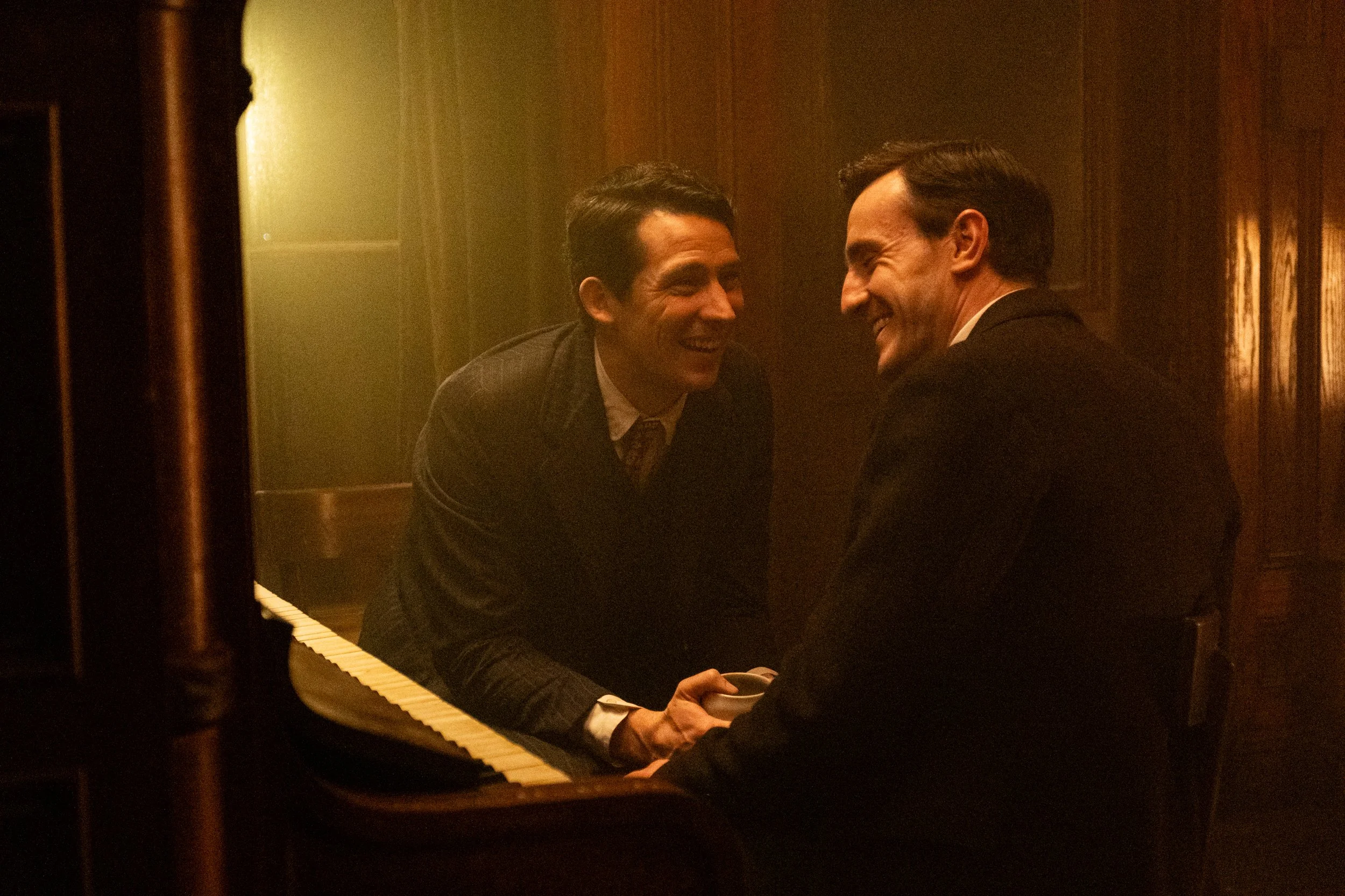
The History of Sound arrives as a quiet and painstaking study of yearning. Oliver Hermanus directs with a kind of ascetic confidence that suits a story built on withheld emotion. The film follows Lionel and David, two young men who travel across a country gathering folk songs on wax cylinders. Their early scenes together possess a muted electricity. Glances carry more charge than dialogue, and silence becomes the space where desire gathers itself. A beautiful score by Oliver Coates threads through these resonant moments, never crowding the frame.
Cinematography by Alexander Dynan shapes the emotional landscape with remarkable discipline. Shot composition often reveals more about the pair’s dynamic than the script does, especially in the way bodies are positioned near one another without touching. Angles tighten around faces only to pull away at decisive moments. A viewer can sense an unspoken thesis about distance, longing, and relational asymmetry.
Paul Mescal gives one of his most inward performances as Lionel. Fragility sits beneath restraint, and he plays the character as someone forever calculating what the world allows him to feel. Josh O’Connor offers a counterpart who remains deliberately out of reach. His portrayal of David leans into avoidance rather than mystery, which adds an arresting tension to the first half. Together they form a partnership that feels convincing precisely because it is unstable.
Narrative control loosens once the protagonists part ways. The second half wanders, sometimes to its detriment. Several scenes land with the weight of filler and weaken the thread of intimacy that holds the opening act together. A handful of later encounters, especially those set abroad, regain momentum with sharper emotional stakes, though the overall pacing stumbles. The film occasionally seems unsure whether it wants to be a romantic study, a character biography or a historical reflection.
The recurring motif of sound remains the film’s strongest intellectual gesture. Songs, voices and recordings offer a quiet philosophy about what survives us. The theme never drifts toward heavy handedness. Instead the film uses sound as an index of memory, of longing trapped in physical form, of small histories preserved without fanfare.
Moments of flashback provide the closest thing to narrative cohesion, reintroducing the dialogue between the two men with a tenderness that sharpens rather than softens the story’s melancholia. Yearning saturates the film without tipping into sentimentality. Grief and loss are treated with respect rather than melodrama.
A final sequence brings the film back to its emotional core with unexpected force. Reflection, not revelation, carries the closing notes. The History of Sound ultimately succeeds as an elegy for bonds never granted room to flourish, and its quiet power lingers long after the frame cuts to black.
Follow Georgios on Medium and Instagram.
The History of Sound is screening in cinemas from Thursday the 18th of December. For tickets and more info, click here.